
TEAM:
Roberto Ferlito Main partner
Alessandra Faticanti Main partner
Rafael De la Torre , architect
Magali Peralta Cases , junior architect
Konrad Napierala, Junior Architect
Assigned Typology: Public facilities, landsacape
Client: Public
Project phase: settled International Competition, Ongoing
Date: 2026
Poggio dei Pini, Cagliari, Italy, Commission On going
LA CASA DEI CARABINIERI
A place of trust, community and landscape
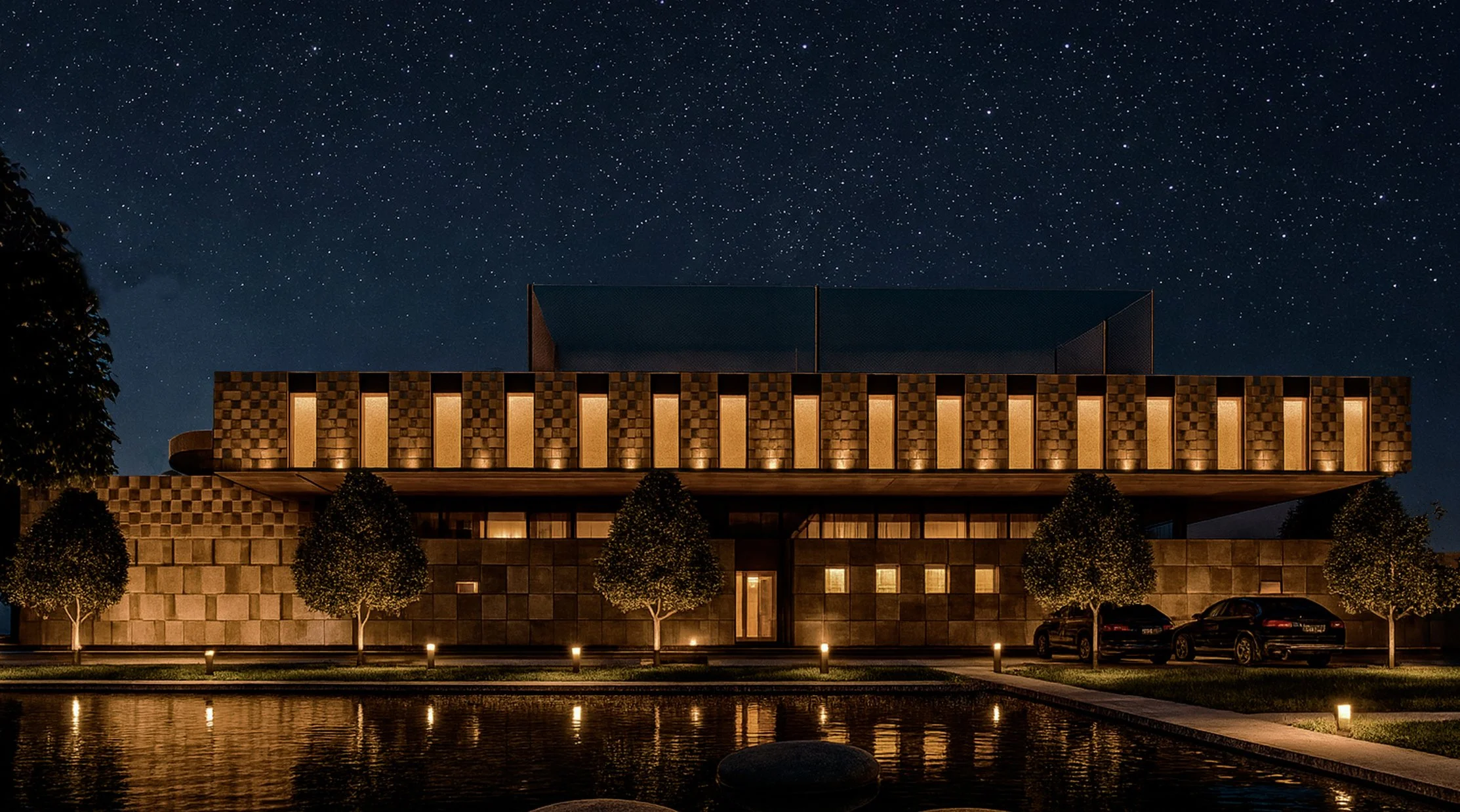
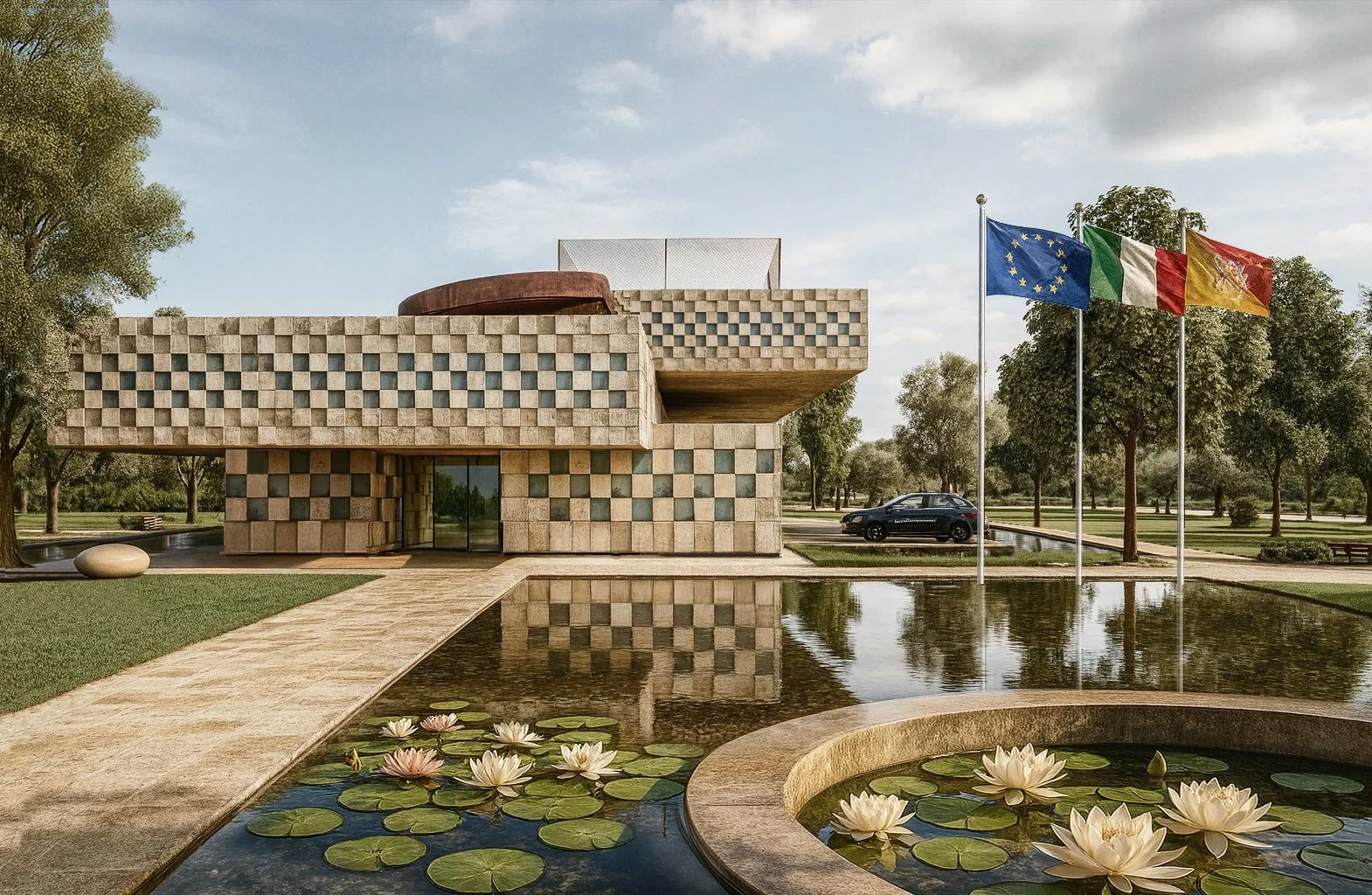
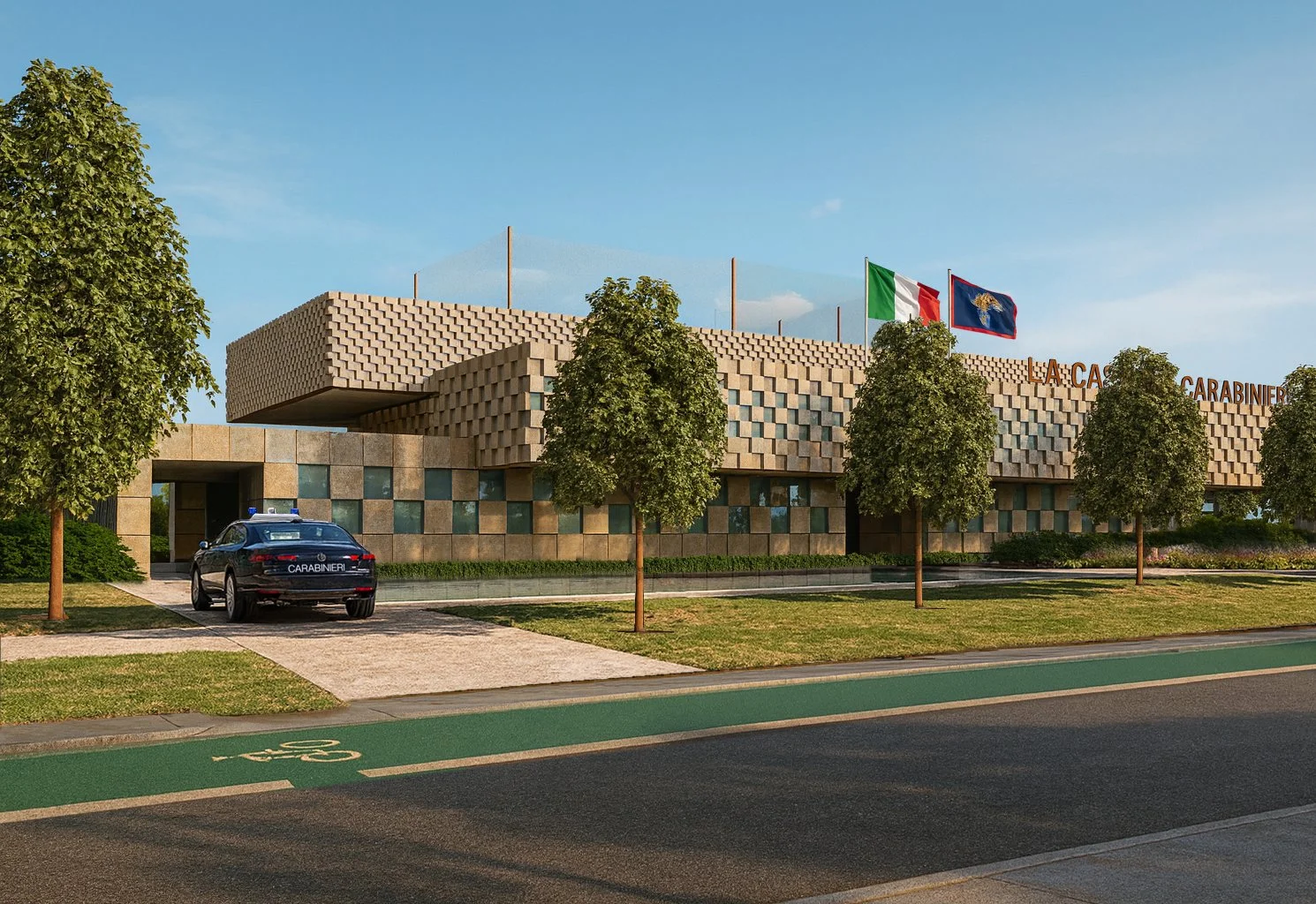
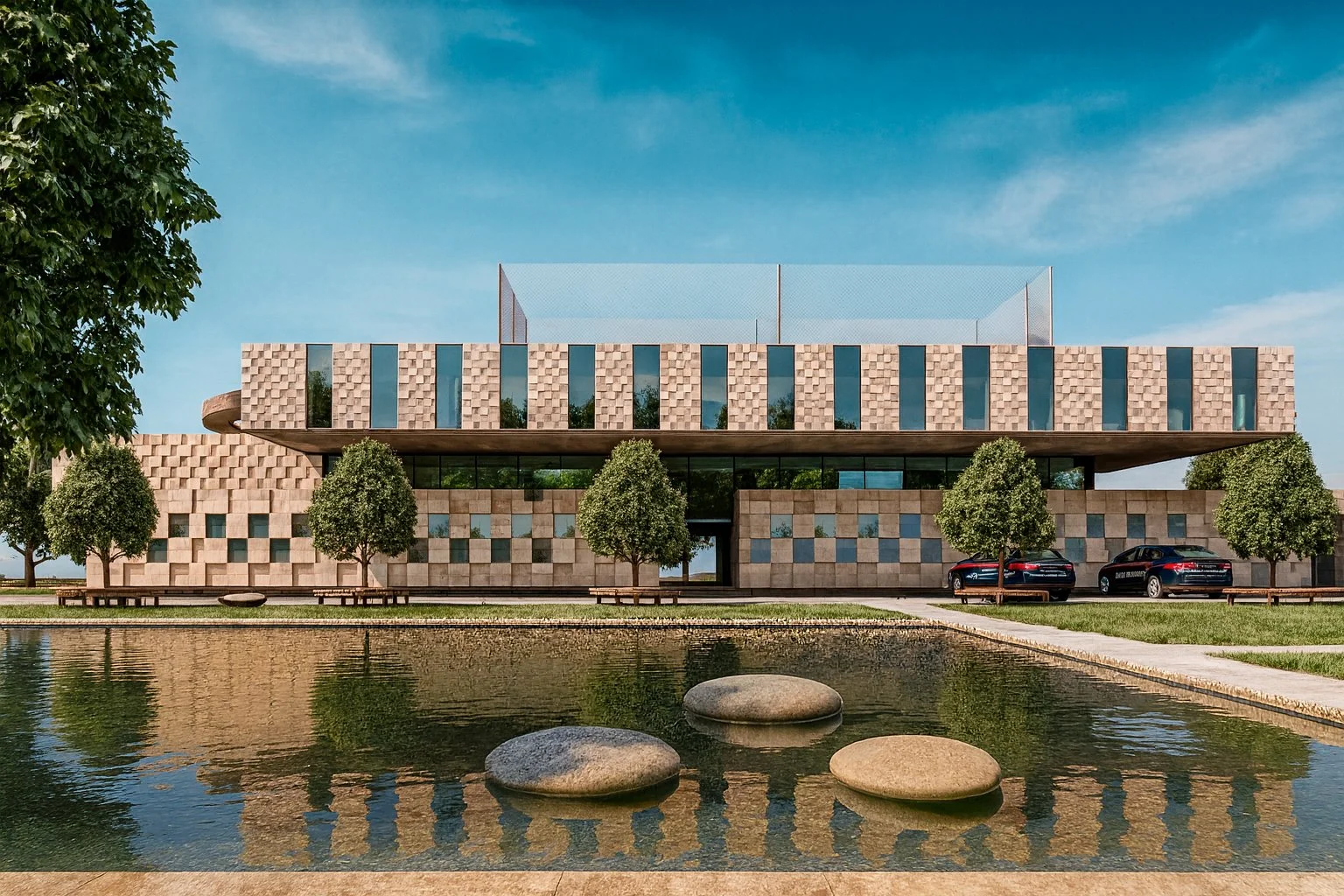
The project interprets the Barracks as a shared "home," an open and recognizable place where the institution approaches the city through listening and presence. Situated in a large urban park, the House of the Carabinieri transcends the image of a closed military complex to become a green, connected, welcoming, and symbolic public space. A safe yet permeable refuge, it can both protect and receive, where architecture, nature, and community intertwine to generate trust, belonging, and proximity between citizens and institutions. The La Casa dei Carabinieri project stems from the idea of transforming the Barracks into a living, recognizable part of the urban fabric, capable of establishing a direct dialogue between institutions, citizens and the landscape. The intervention fits harmoniously into the context of Syracuse, taking on a strategic role of urban and symbolic connection: no longer an isolated organism, but an open, permeable system rooted in the city.
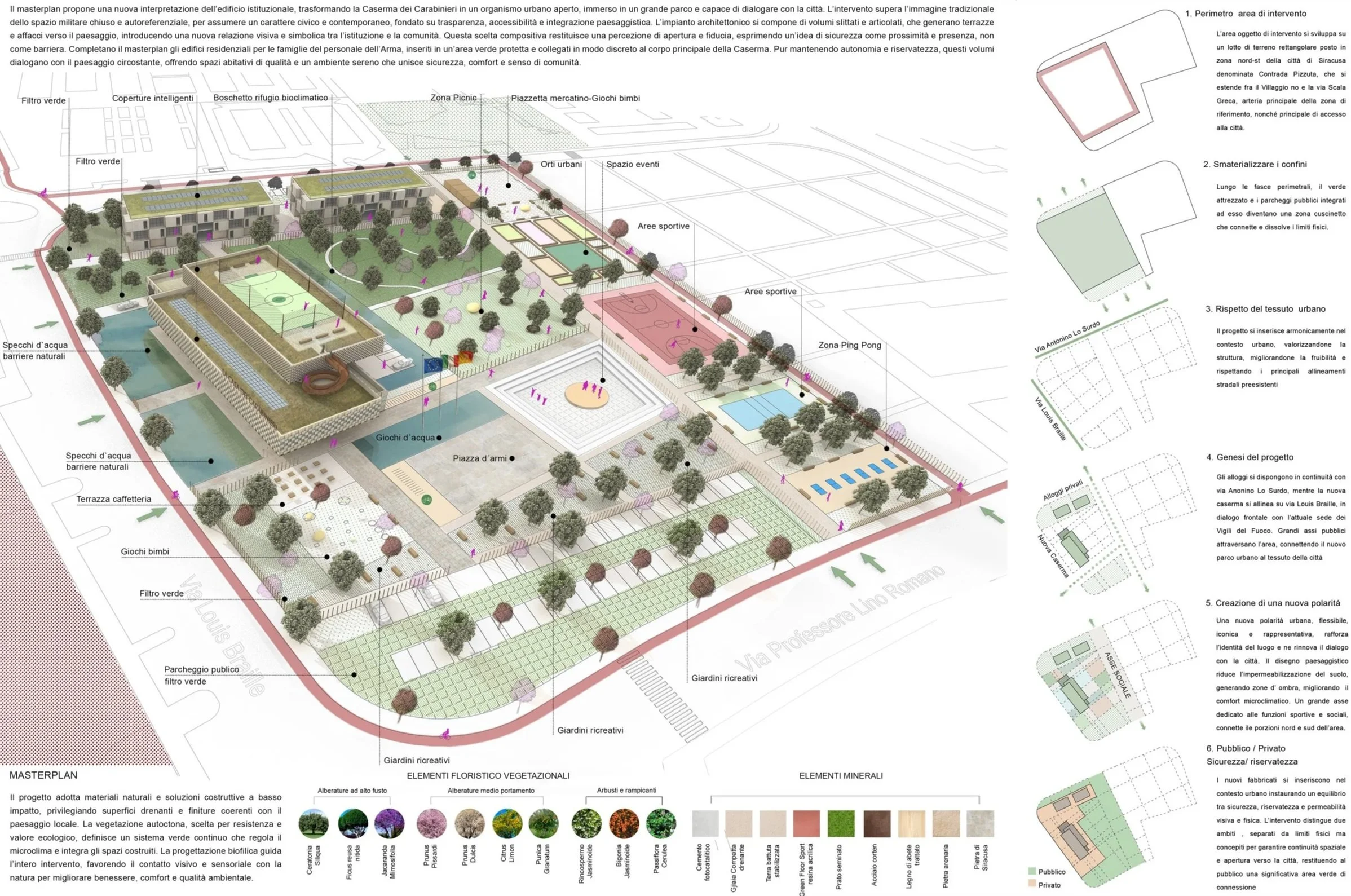
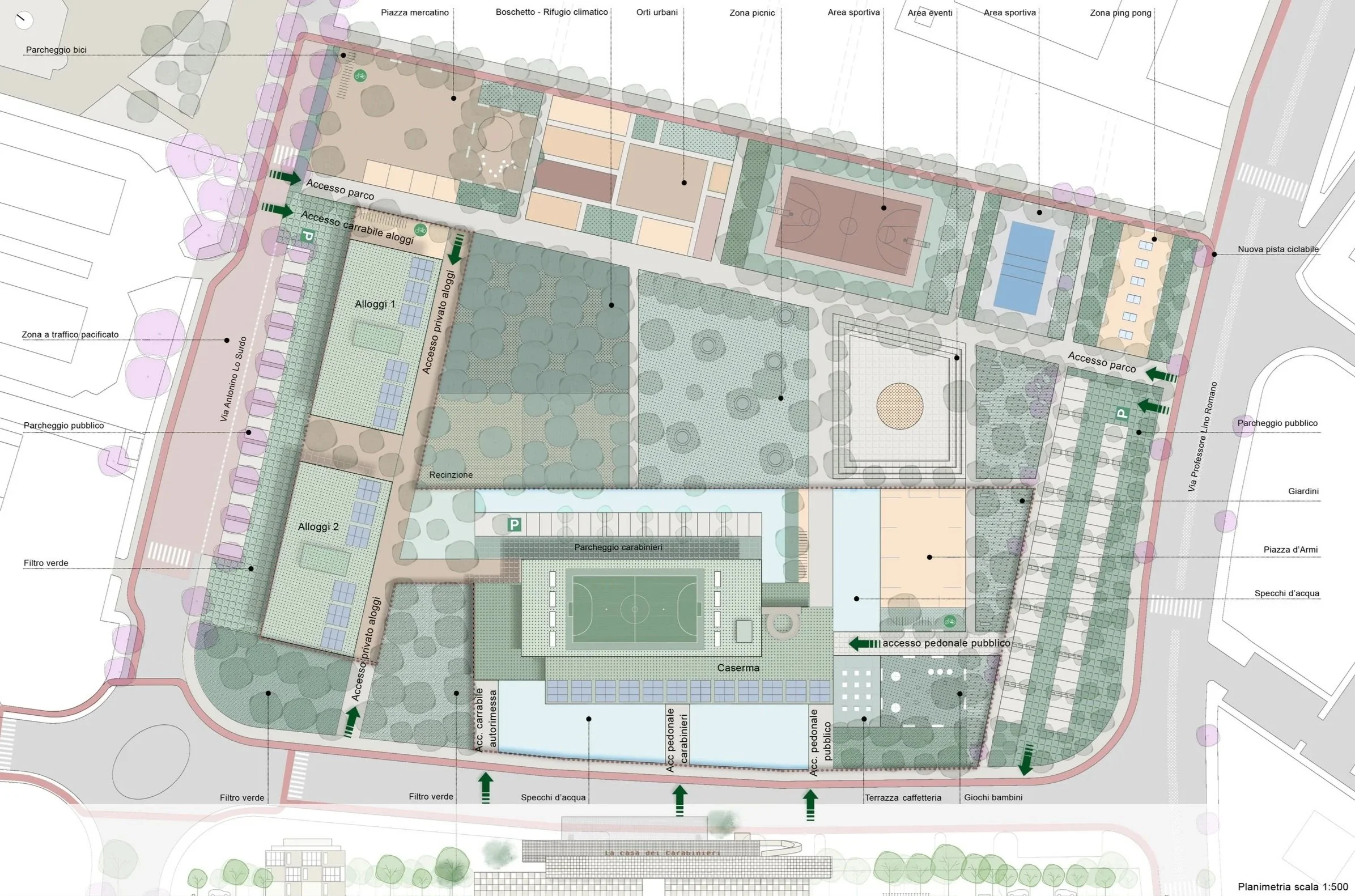
The masterplan defines a new green centrality, structured by large pedestrian and visual axes that connect the north and south of the area, integrating the institutional complex with the surrounding neighborhoods and returning a broad urban park to the community. The urban design is based on the principle of controlled permeability, which allows passage and perception of the place without compromising the security and privacy of functional spaces.
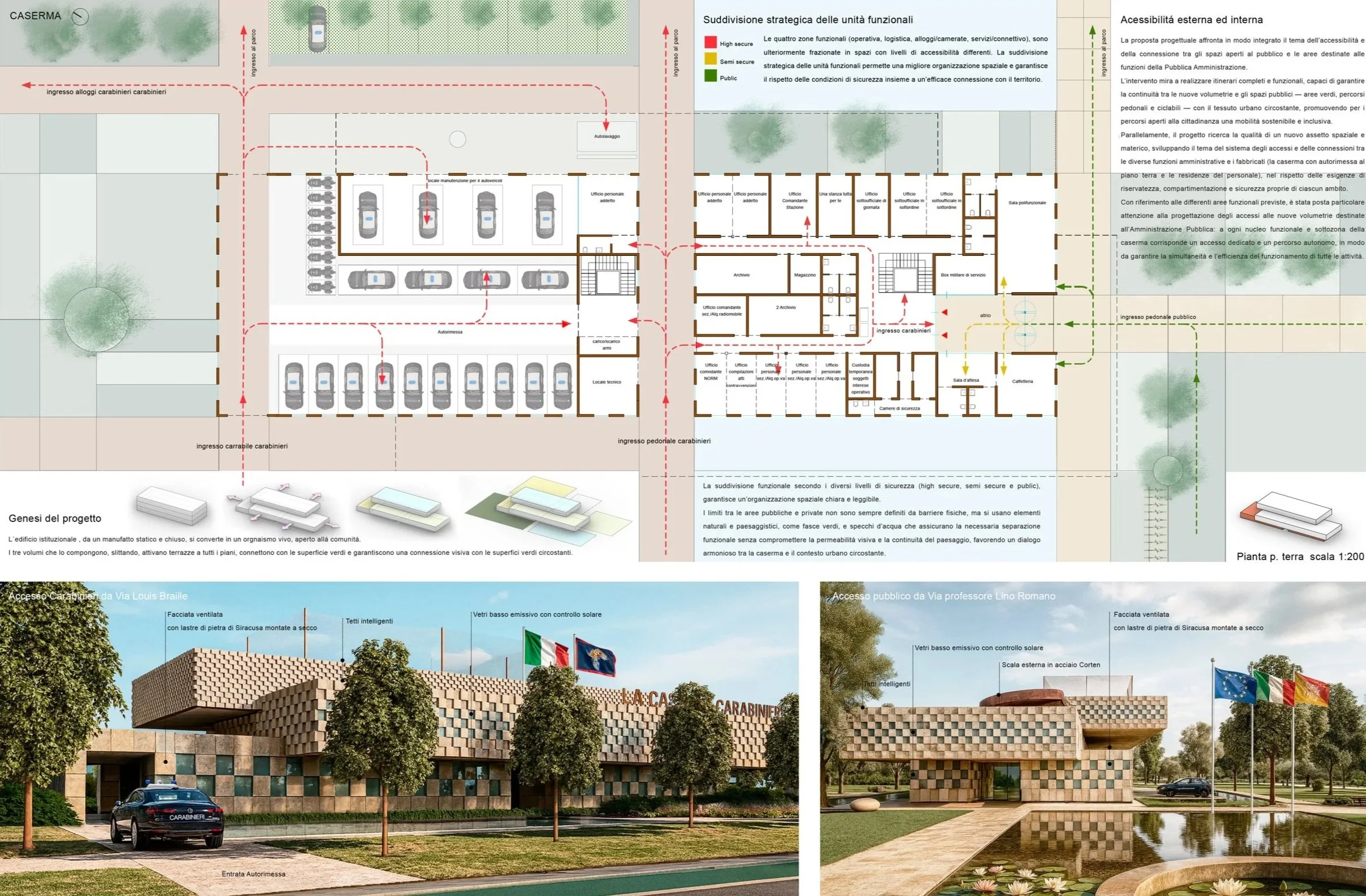
The architecture is articulated through shifted volumes calibrated to the existing road axes, generating courtyards, terraces and perspectival views that encourage the relationship between inside and outside. This arrangement gives the complex a dynamic and contemporary image, able to represent the institution as a civic presence rather than a barrier.
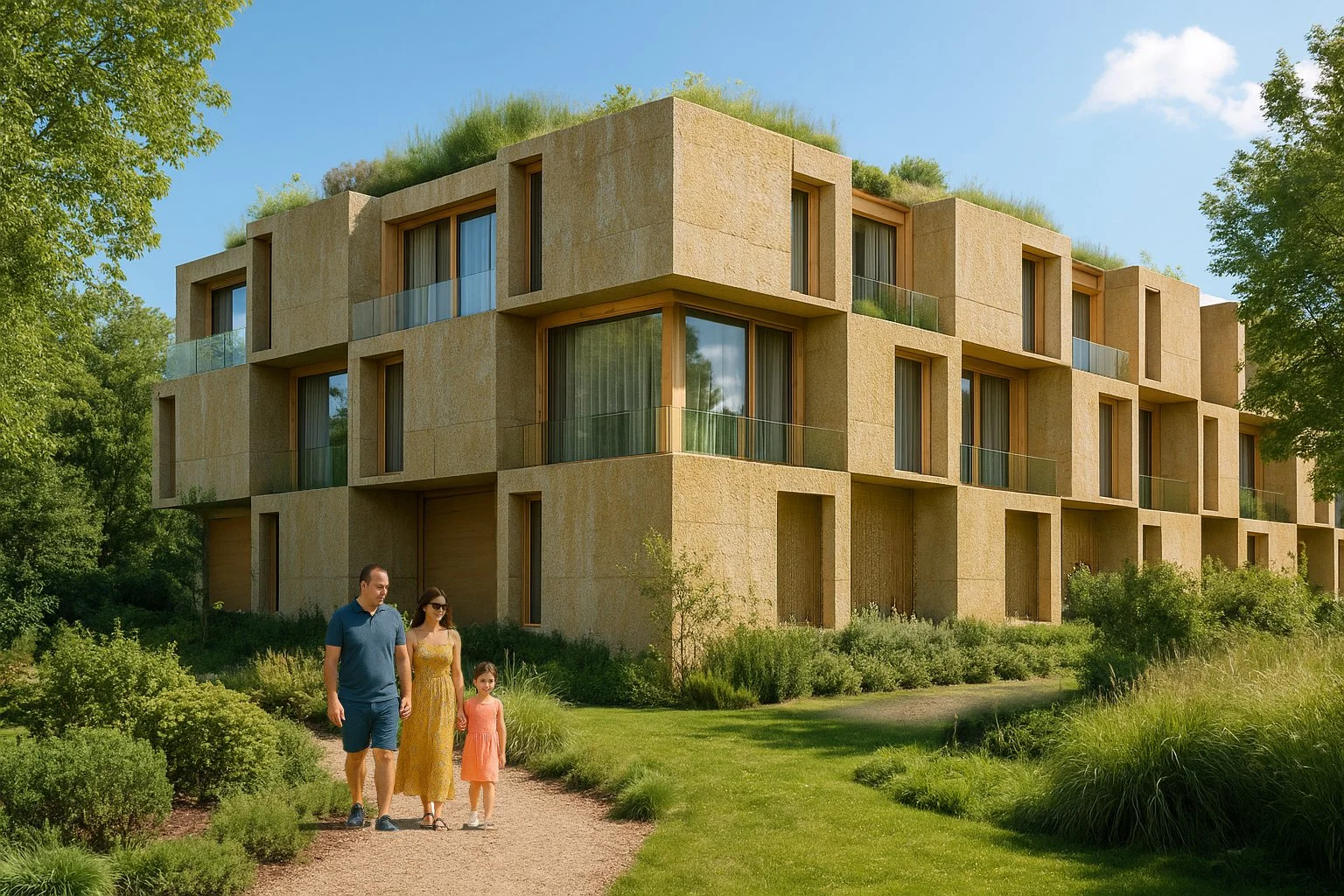
Completing the masterplan are residential buildings for the personnel of the Arma and their families, immersed in greenery. These buildings, while maintaining a functional link with the main complex, are located in a more enclosed and protected area, where privacy and quality of living blend with the reassuring presence of the institution. The design of the open spaces promotes sociability and daily well‑being, creating a domestic, safe and harmonious environment, consistent with the idea of a Barracks as a place of protection, trust and community.