
TEAM:
NÁBITO architects :
Roberto Ferlito Main partner
Alessandra Faticanti Main partner
Rafael La Torre, architect
Magali Peralt Casas, junior architect
Other Structures:
Jose Luis Escudero, engenier
A&P Landscape architects:
Flavio Trinca, architect
Emanuele Von Normann, architect
IH architects:
Irida Hasa, local Architect:
Pichi&AVO, artists
Coolville design lab, mobility consultant
Assigned Typology: Public University Campus
Client: Public
Project phase: International Invited Competition, Settled
Date: 2026
UAMD INTERANTIONAL CAMPUS, Durres, Albania, On going
Durres: A Historic Gateway Reimagined
A gateway of exchange
For centuries, Durres has been a gateway of exchange, shaped by its unique geographic position between the Adriatic Sea and the Balkan hinterland. Founded as the western starting point of the Via Egnatia, the city has historically connected East and West, acting as a hinge between maritime and continental routes. Its port, coastal plain, and inland connections have made Durres a place where cultures, goods, and ideas have continuously crossed, layered, and transformed the territory.
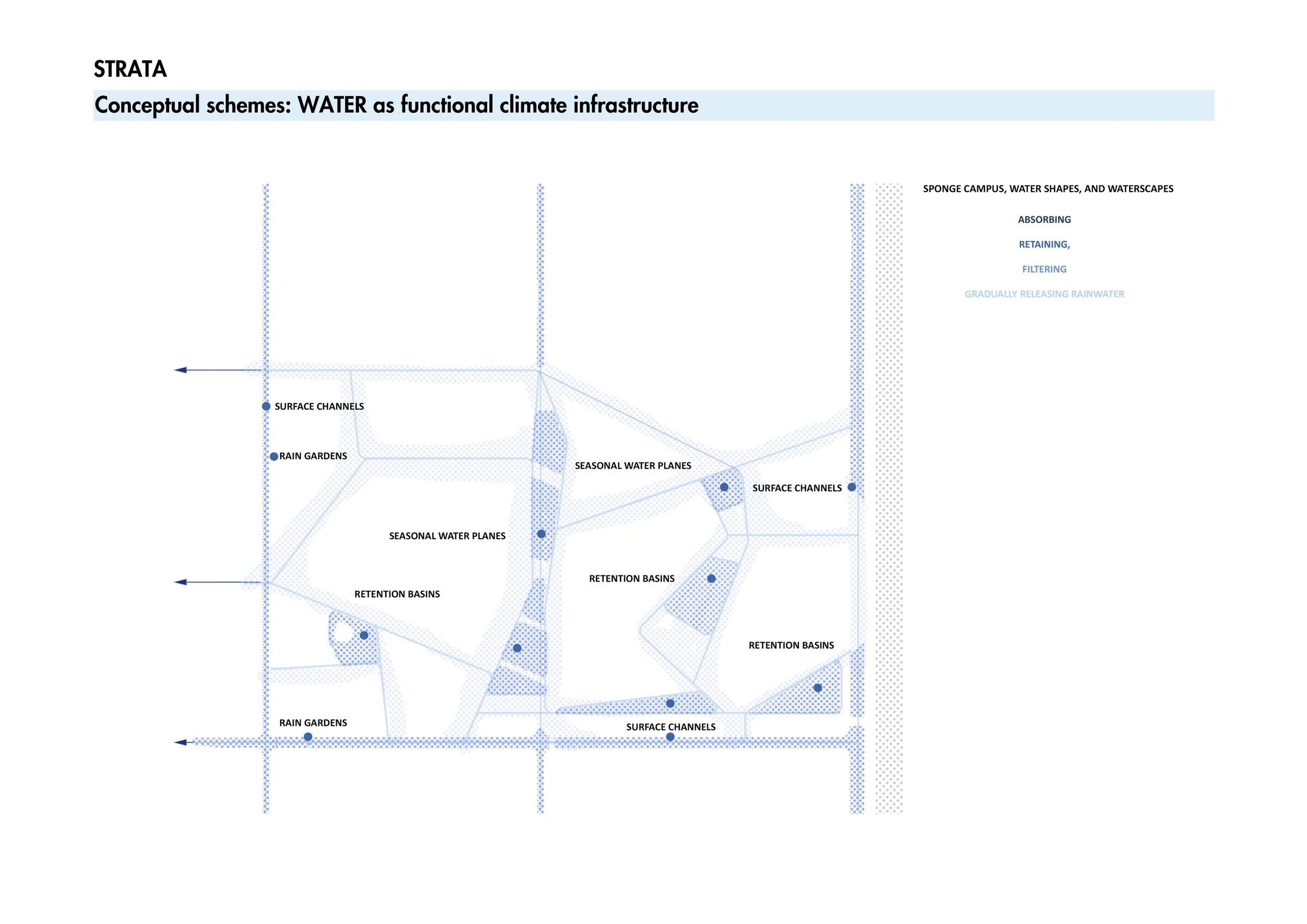
This long history of exchange is not only cultural and economic, but also spatial and geomorphological. Water systems, flat landscapes, and infrastructural corridors have structured movement and settlement over time, producing a city defined by openness, accessibility, and transition rather than enclosure.
Reinterpreting the legacy
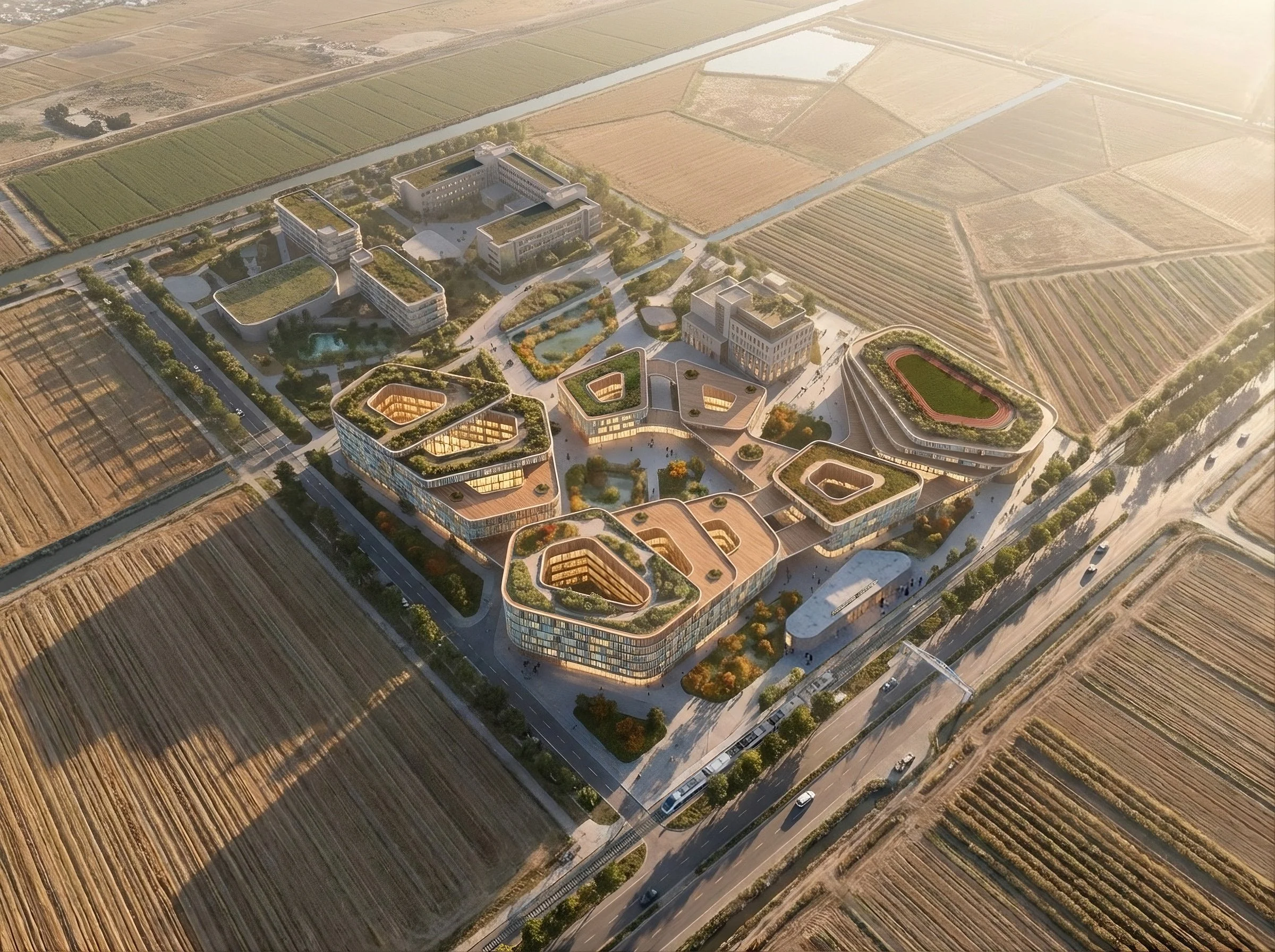
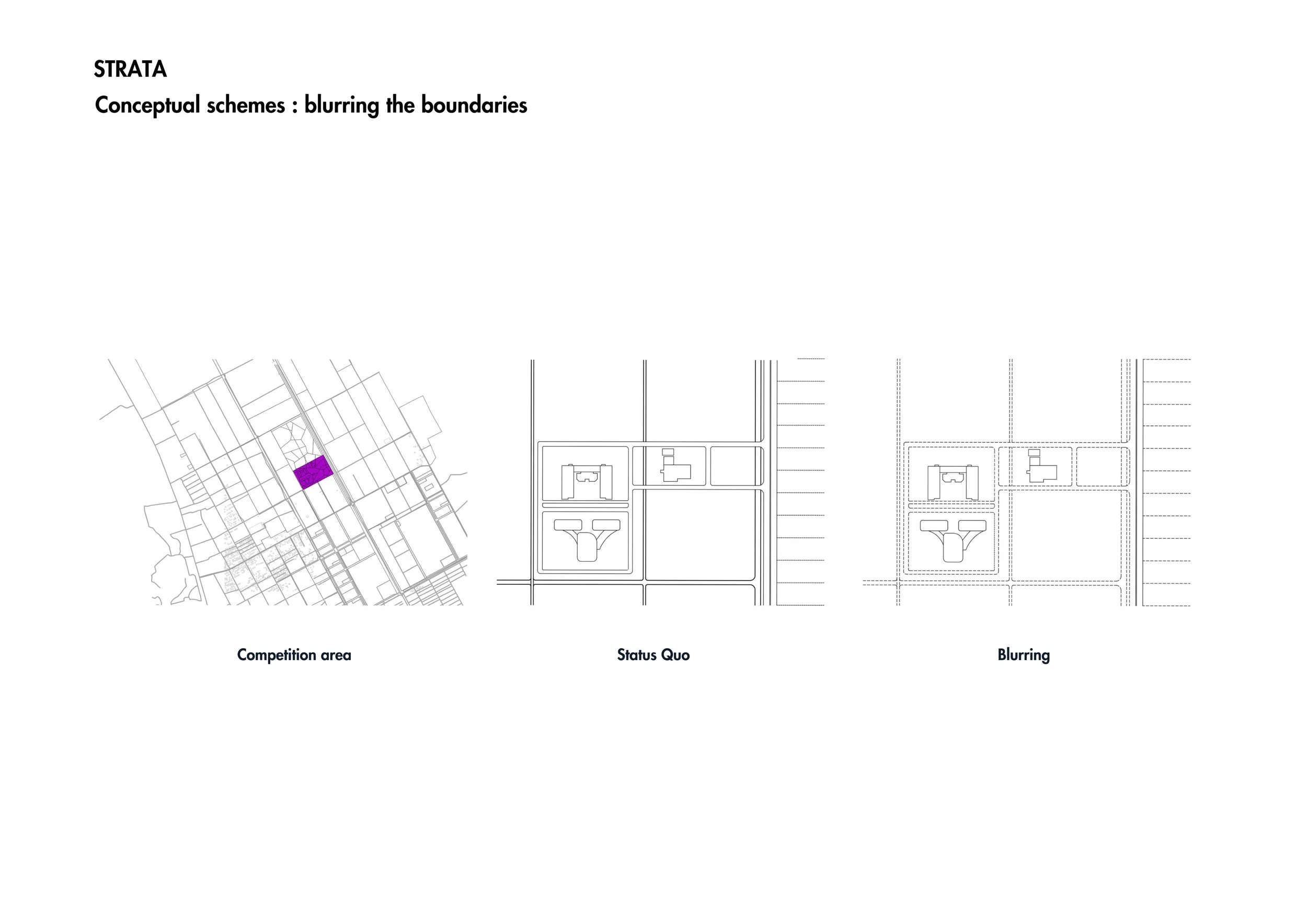
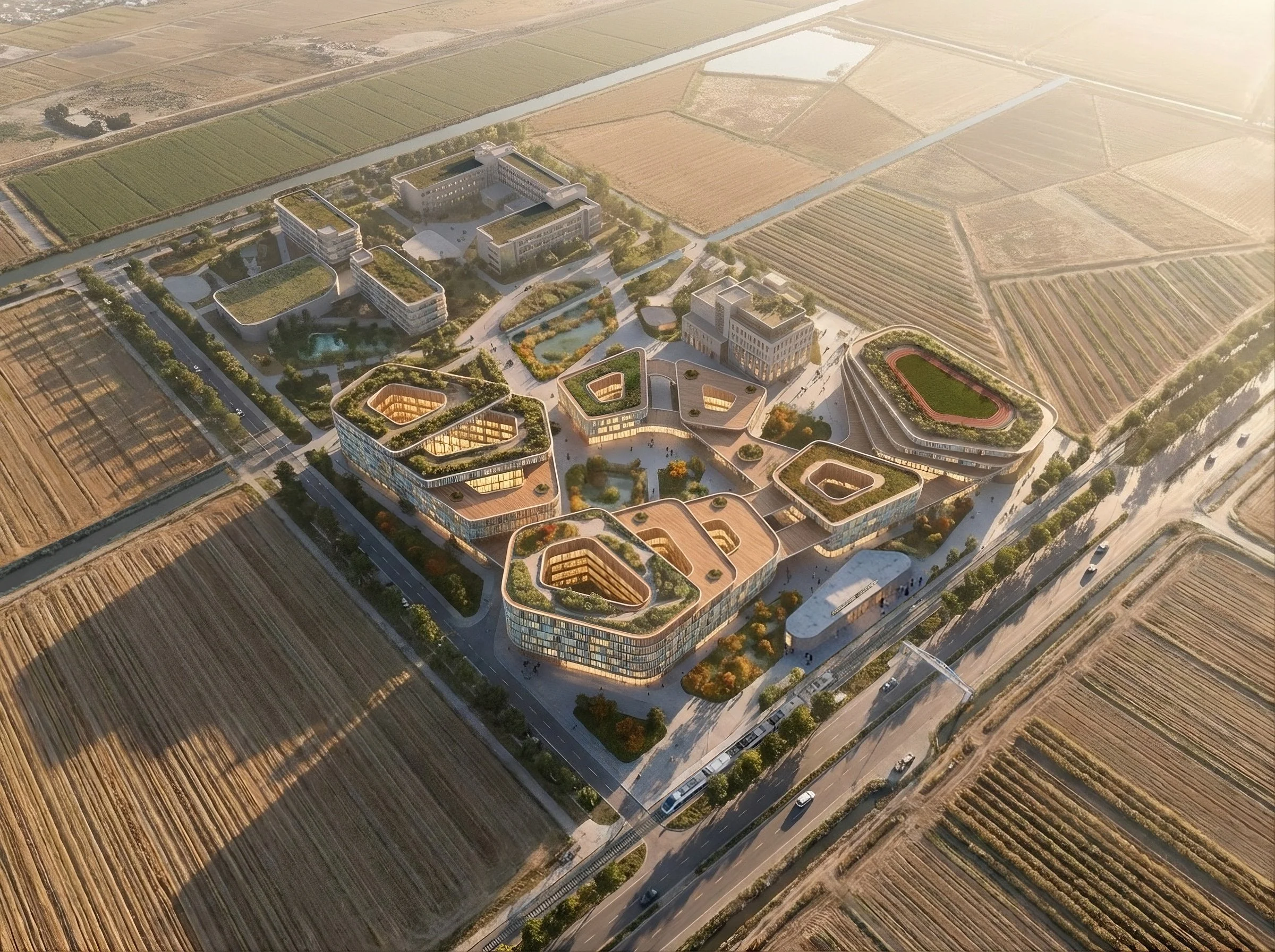
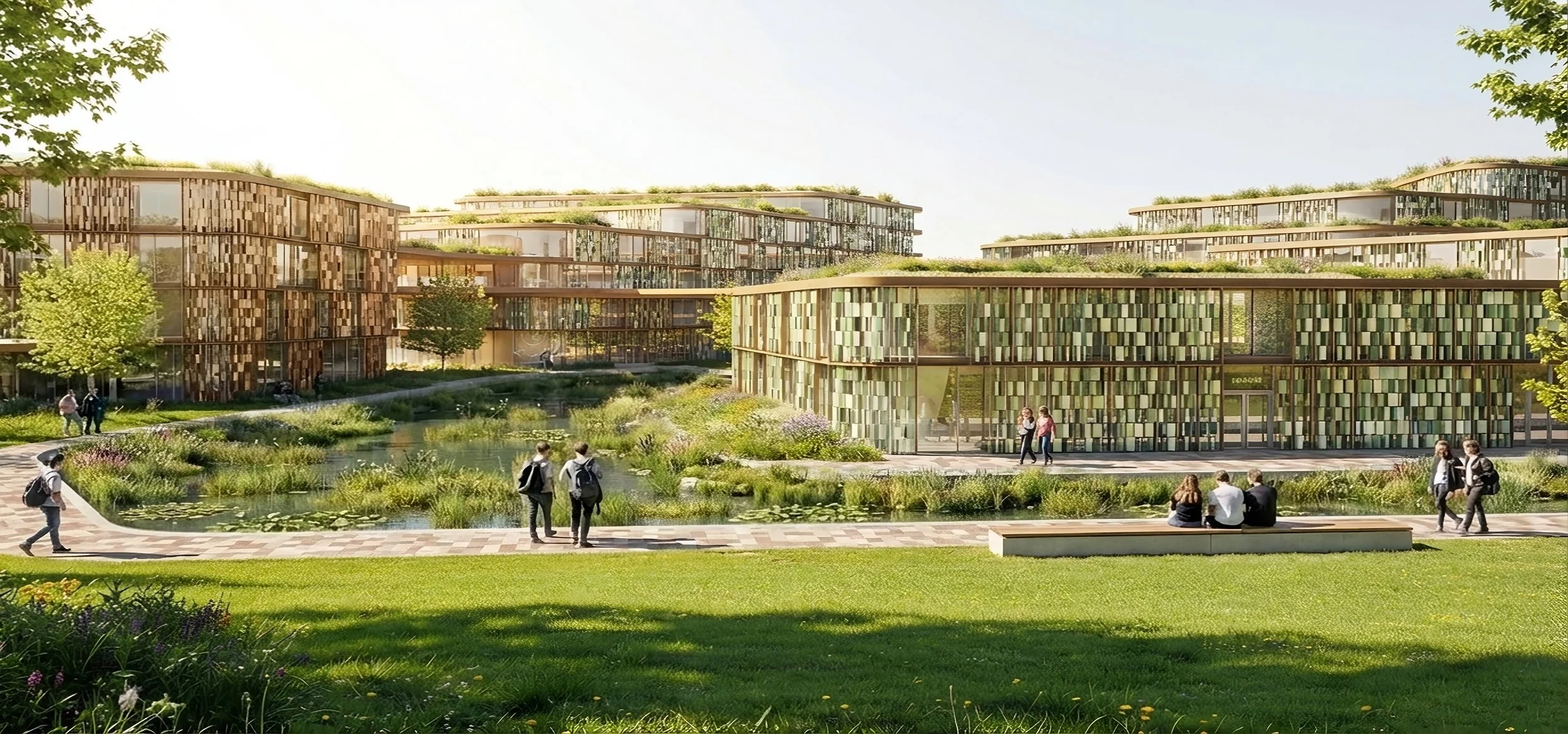
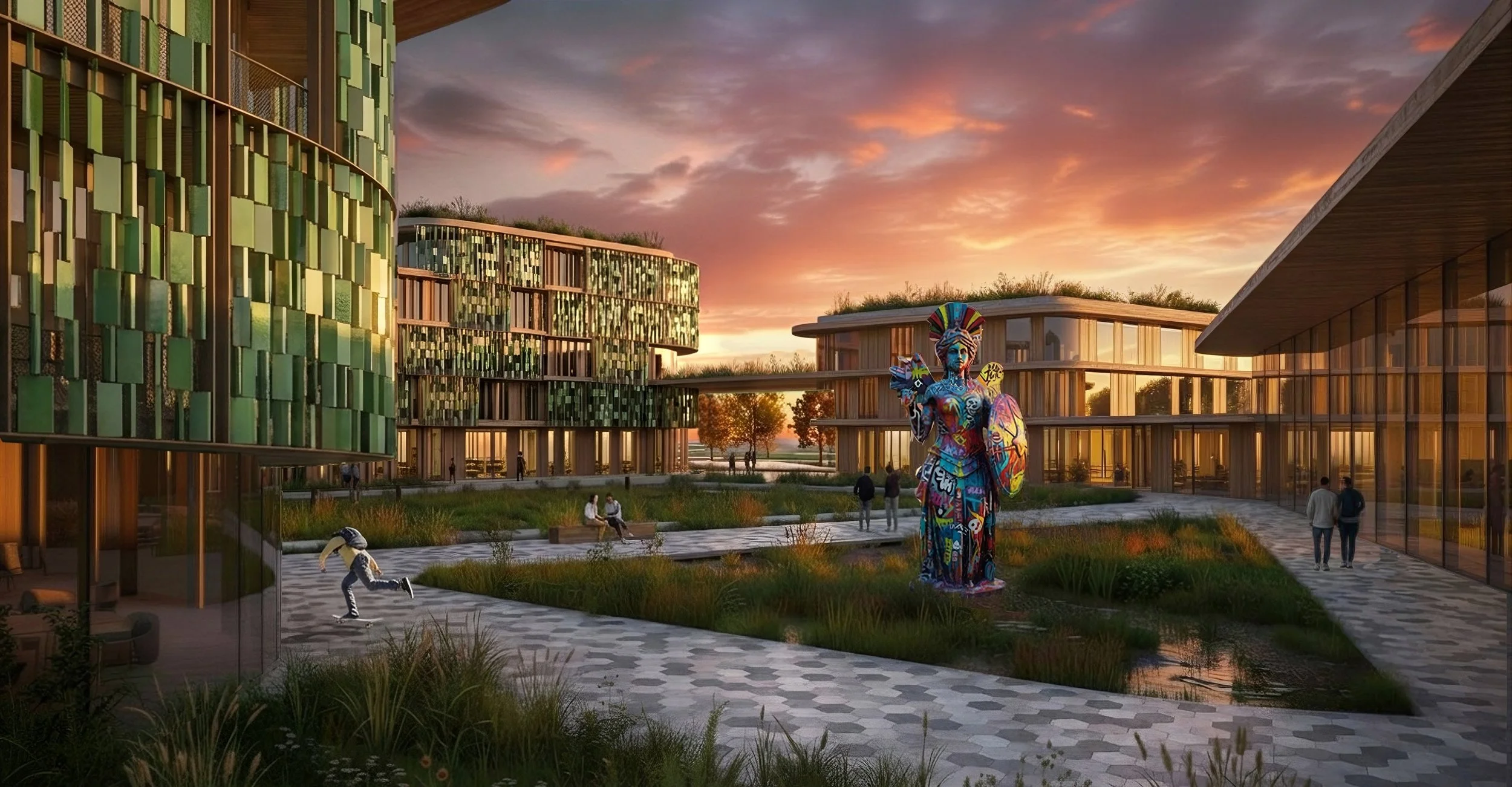
The expanded Aleksander Moisiu University campus inherits this legacy and reinterprets it for the 21st century. Rather than functioning as a closed academic enclave, the new campus is conceived as an open urban infrastructure, continuing Durres' historical role as a connector within the metropolitan territory.
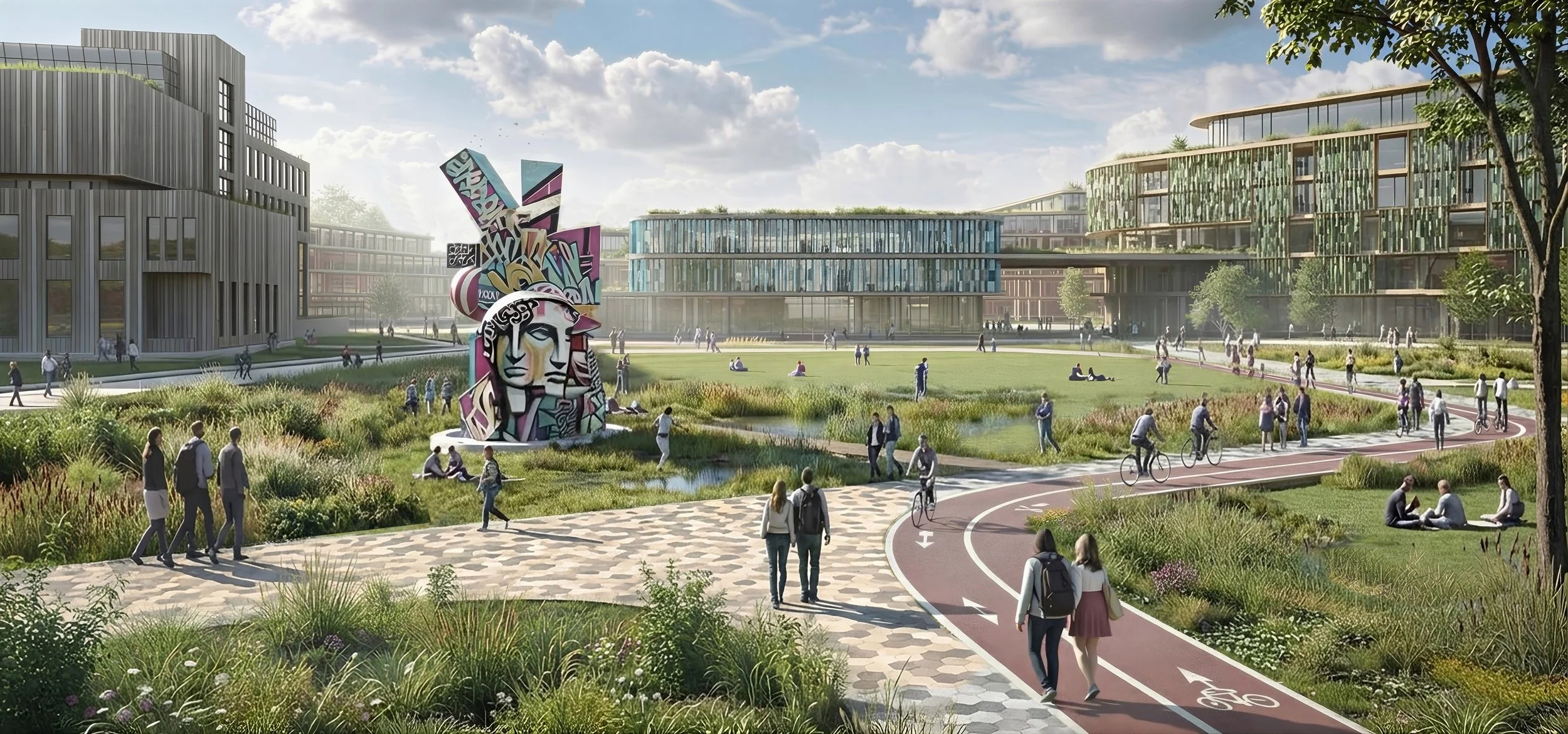
The campus becomes both a physical and cultural bridge: linking city and plain, local communities and international networks, everyday urban life and intellectual production. Learning, research, innovation, culture, sport, and social activities are conceived as shared resources, distributed across open and accessible spaces where students, researchers, and citizens intersect.
STRATA
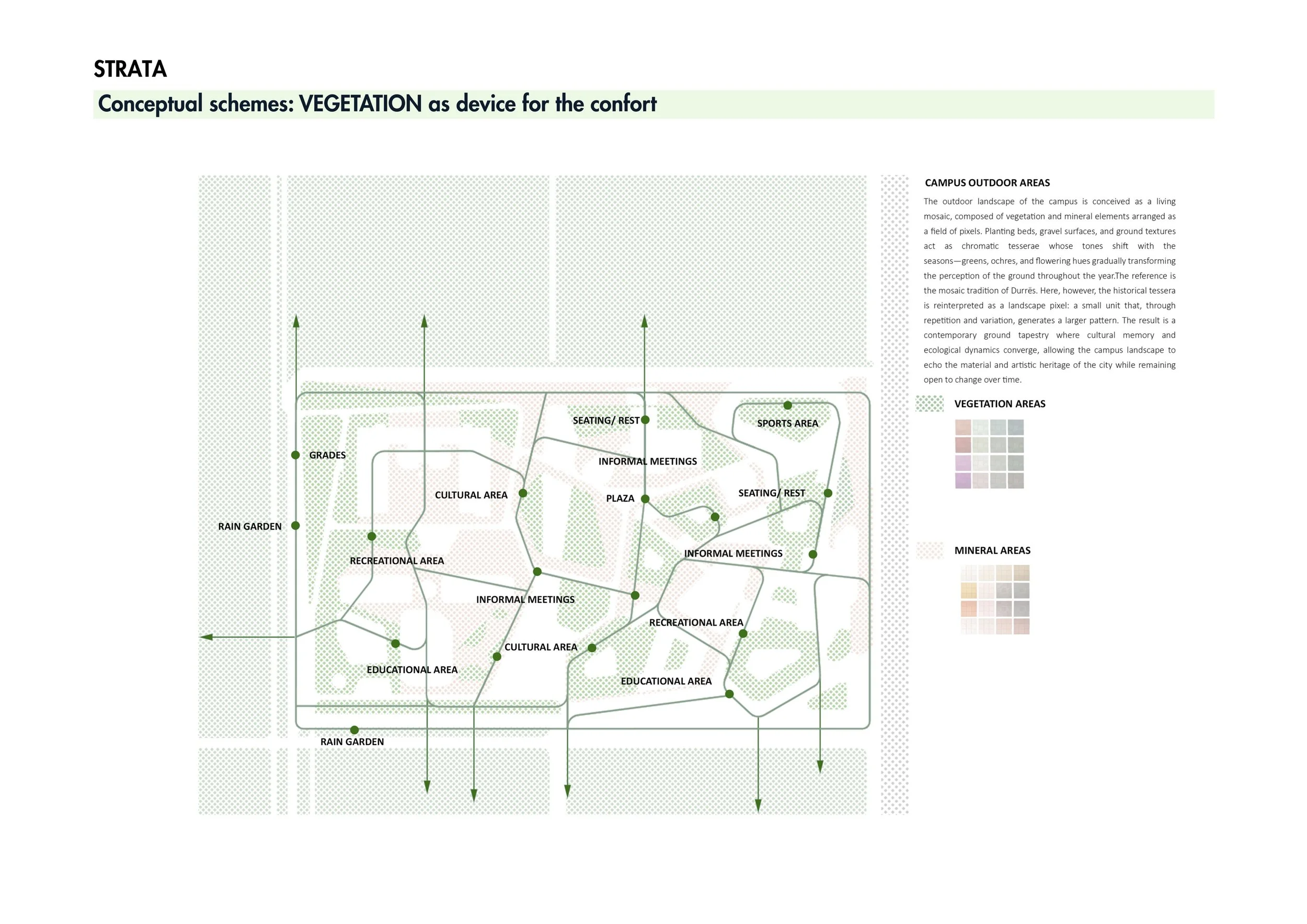
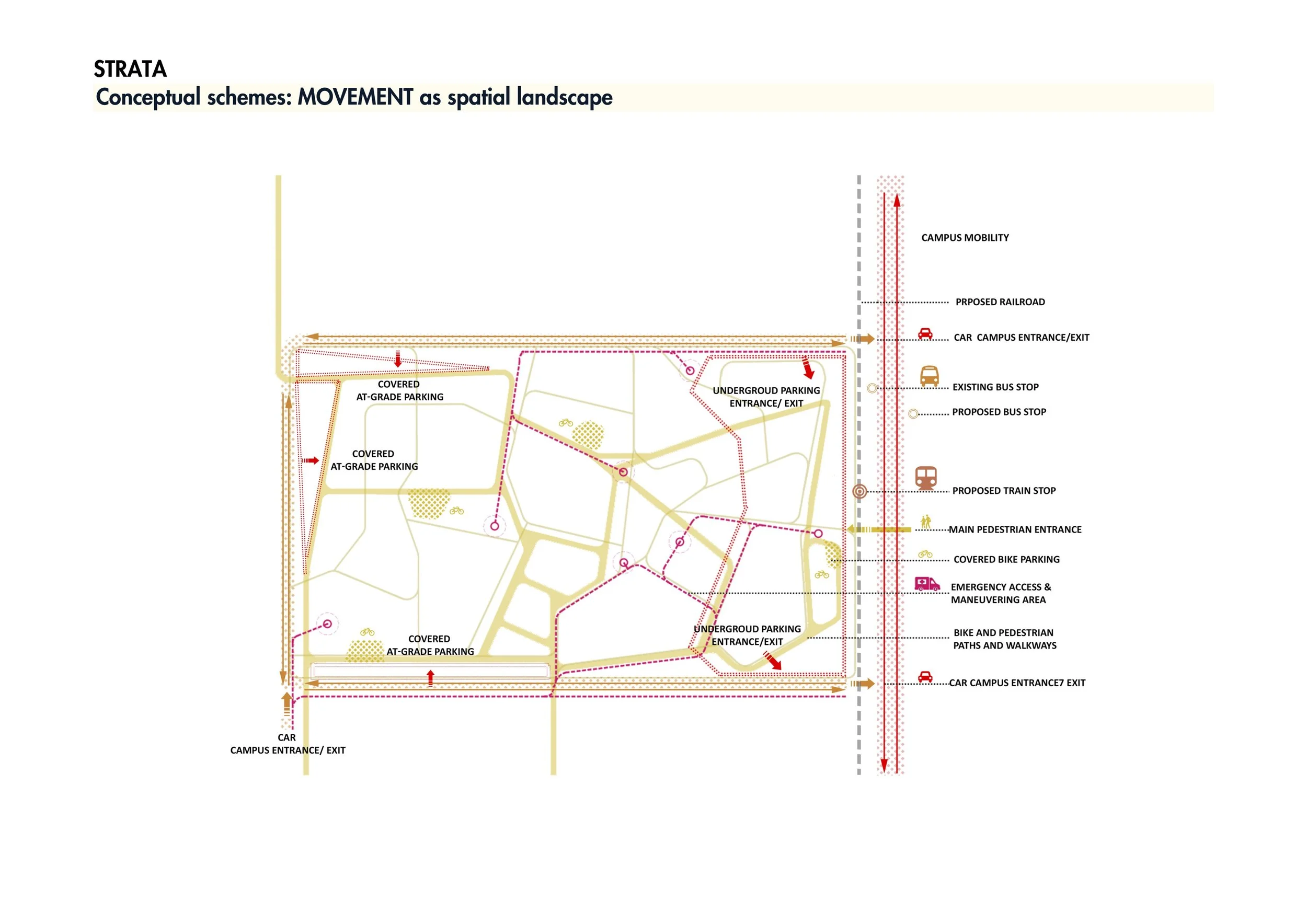
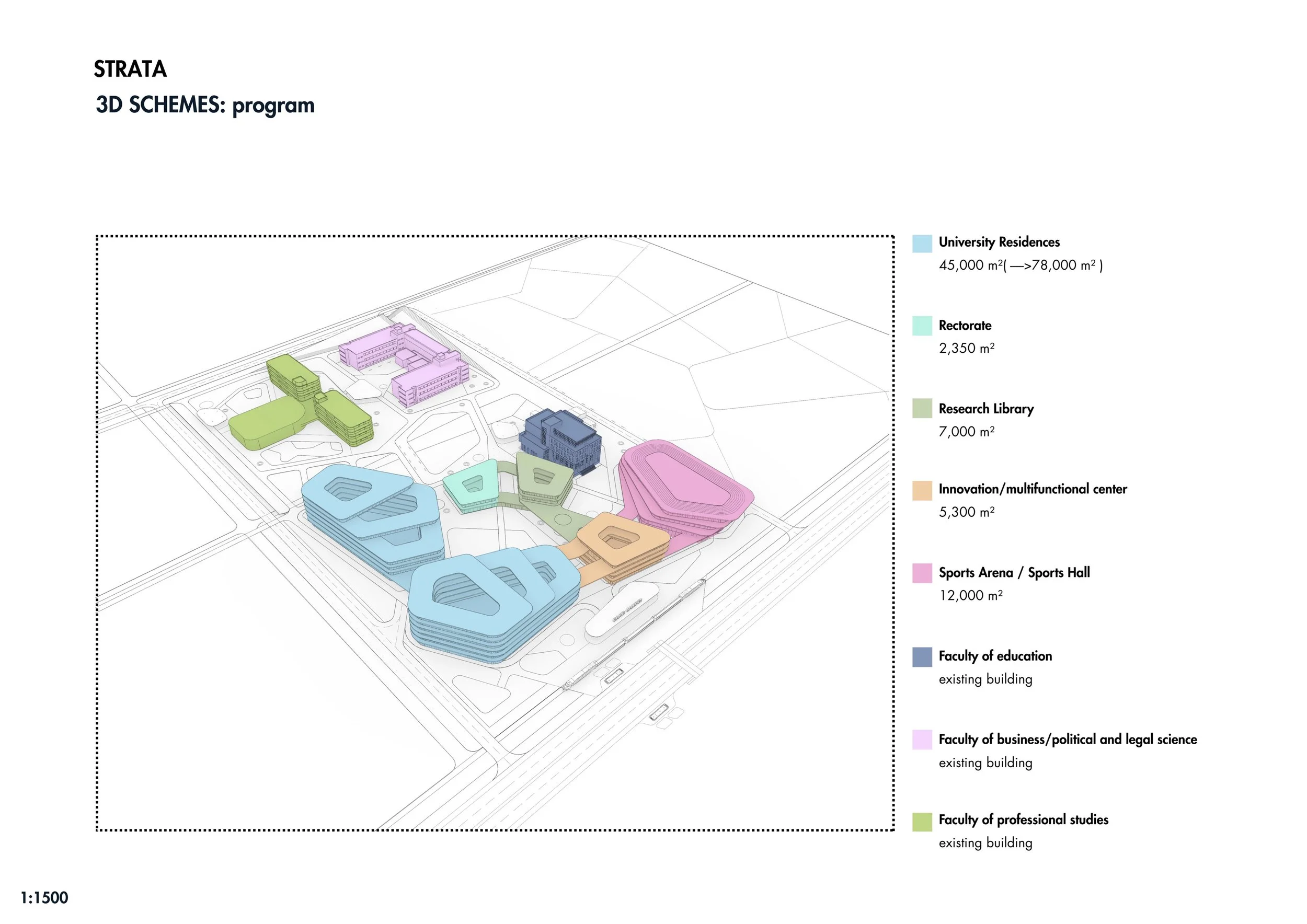
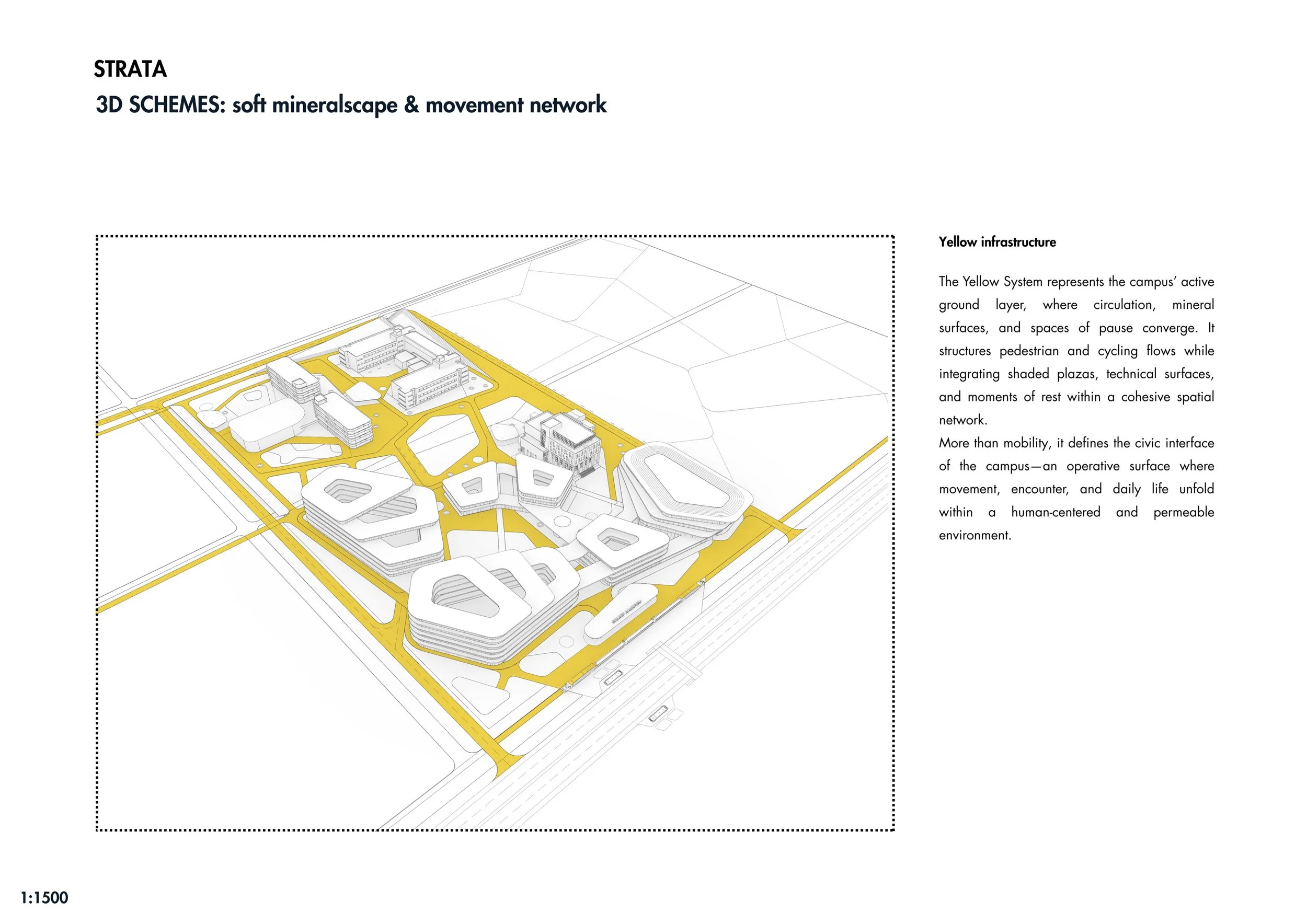
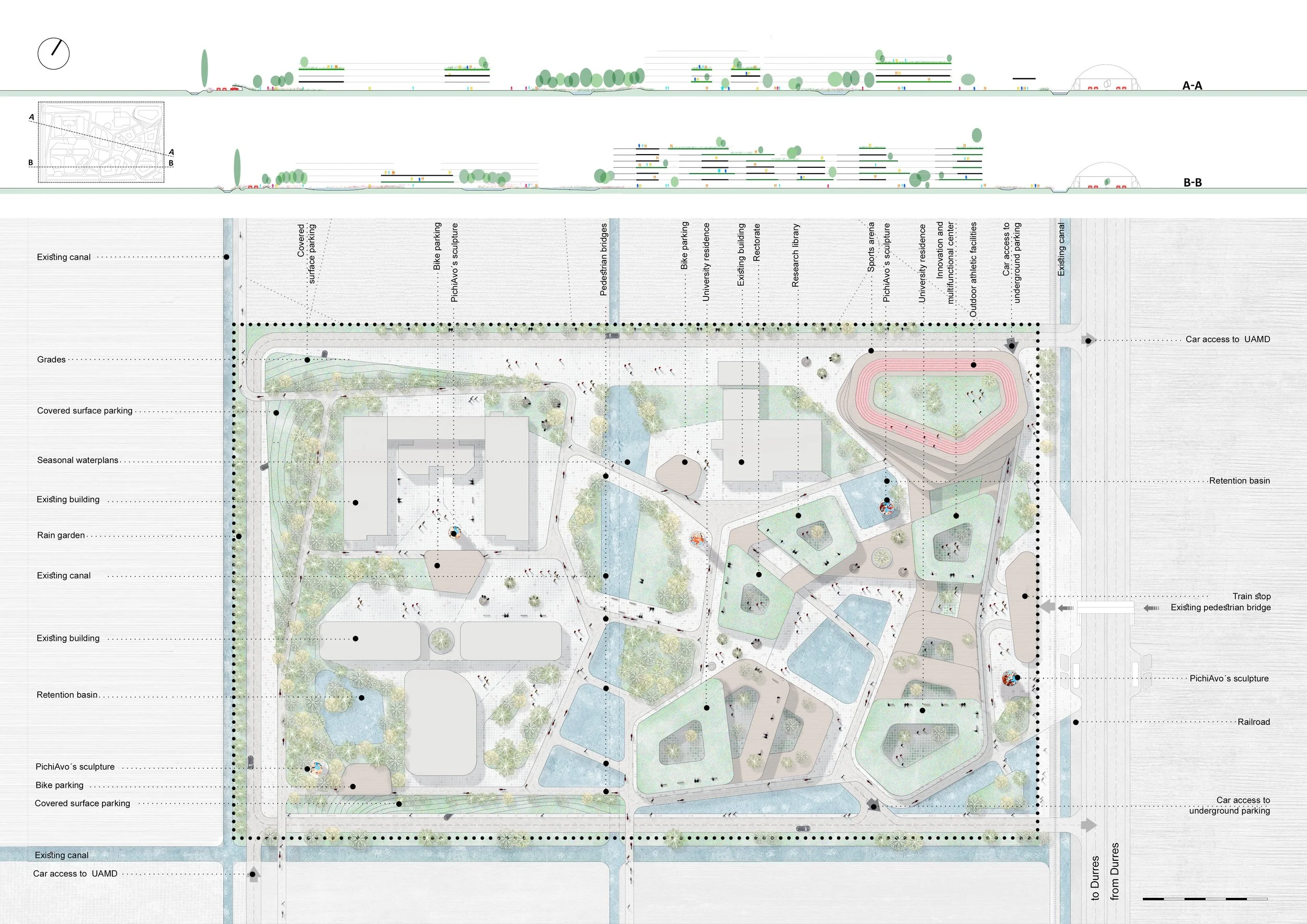
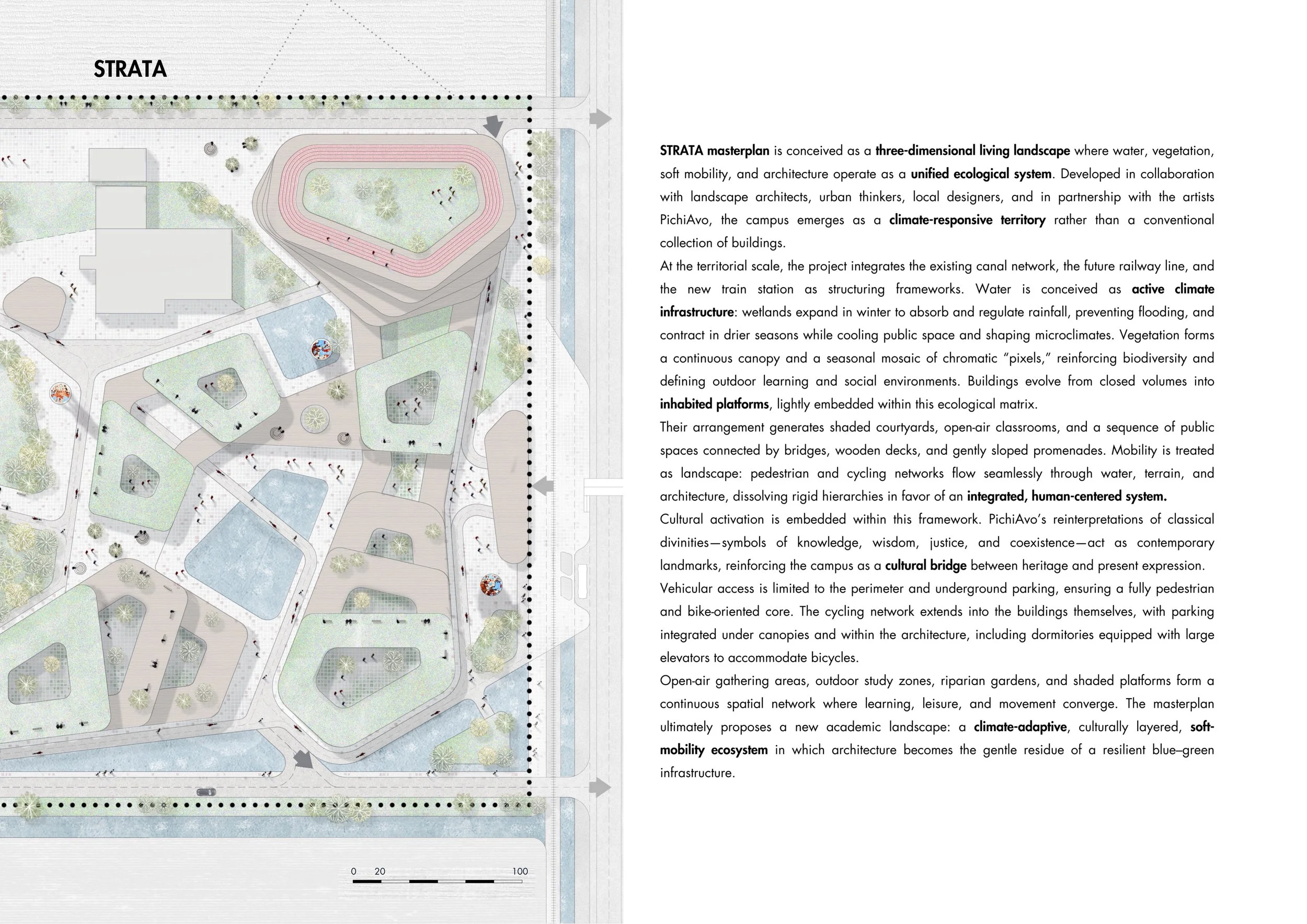
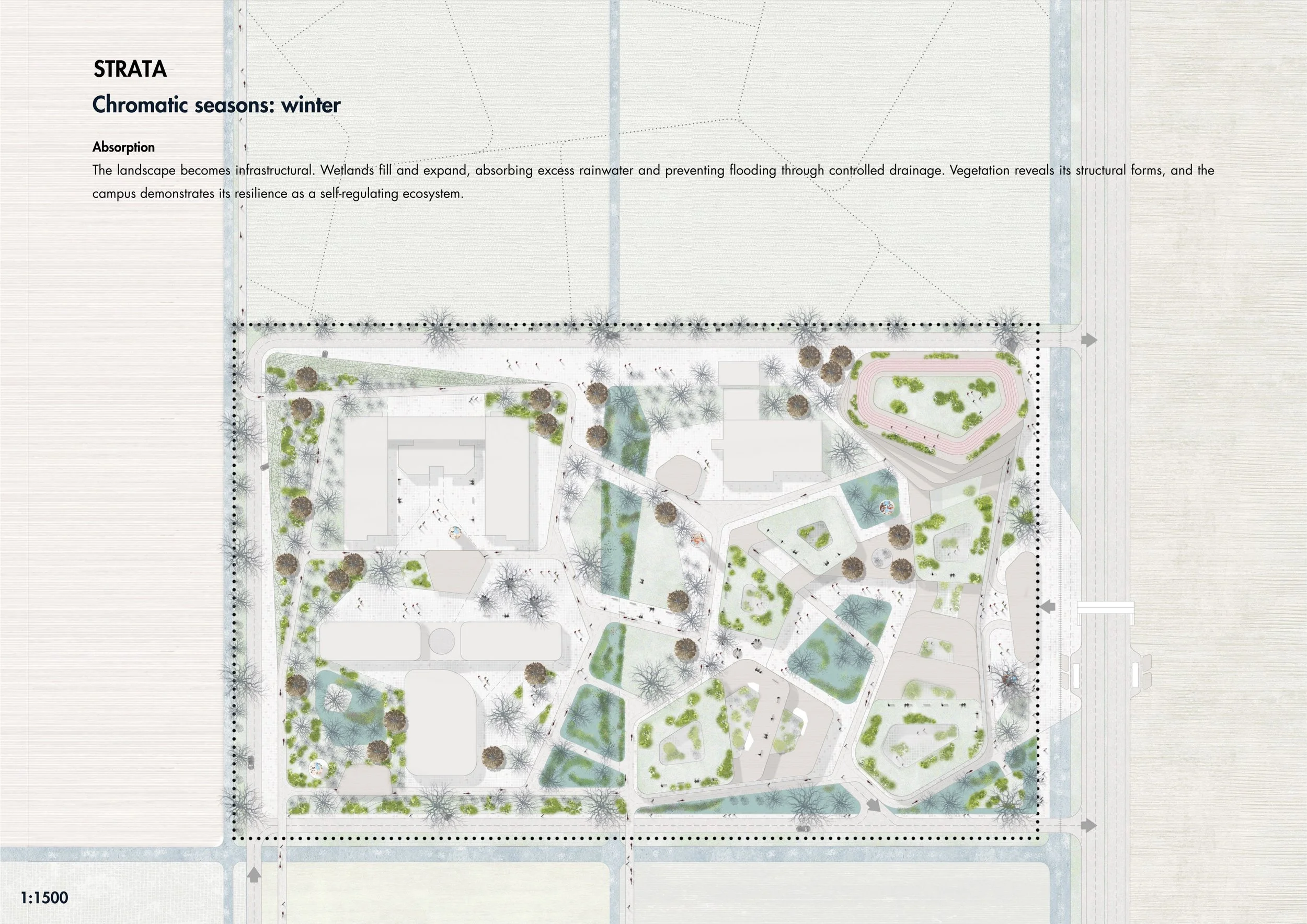
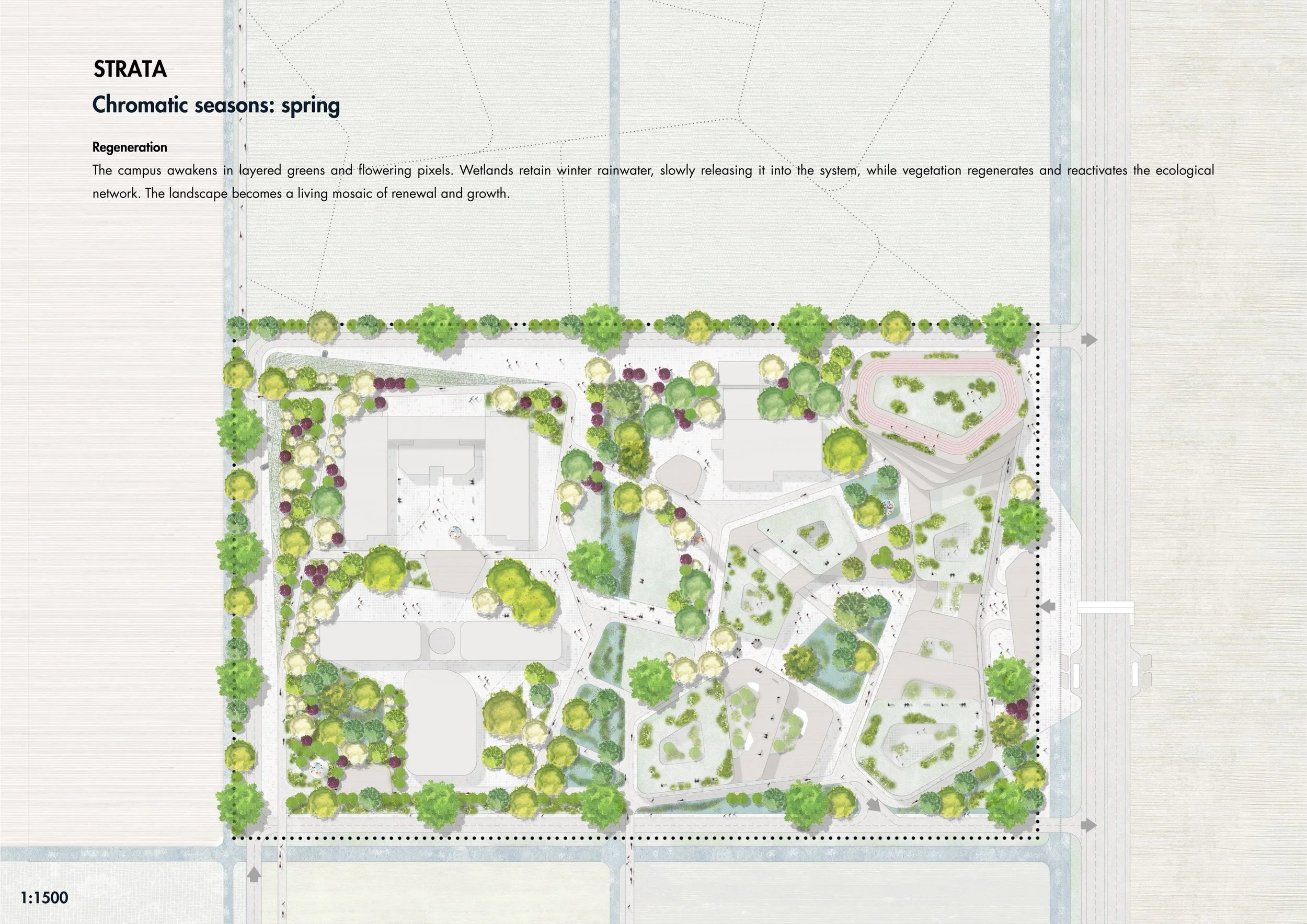
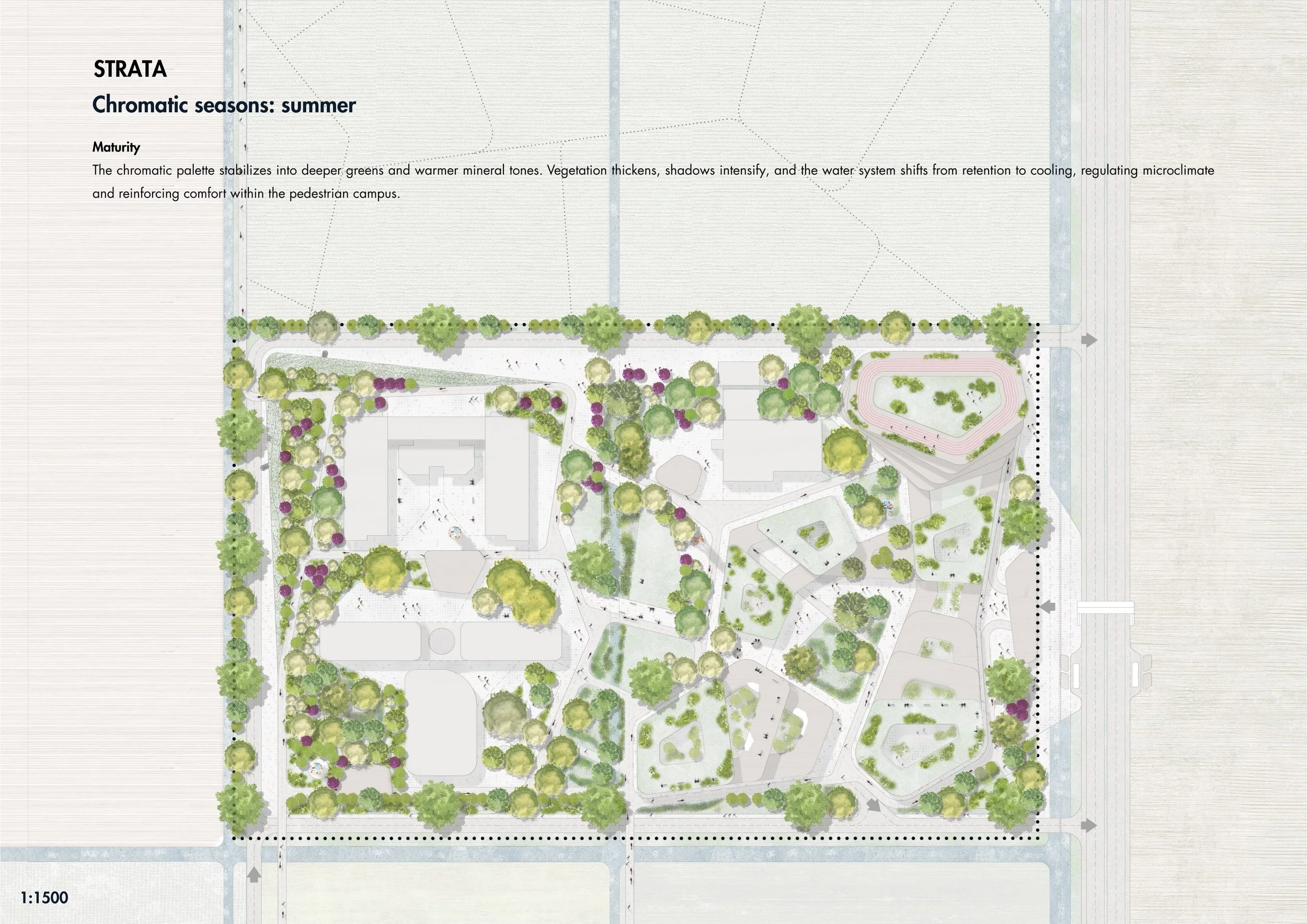
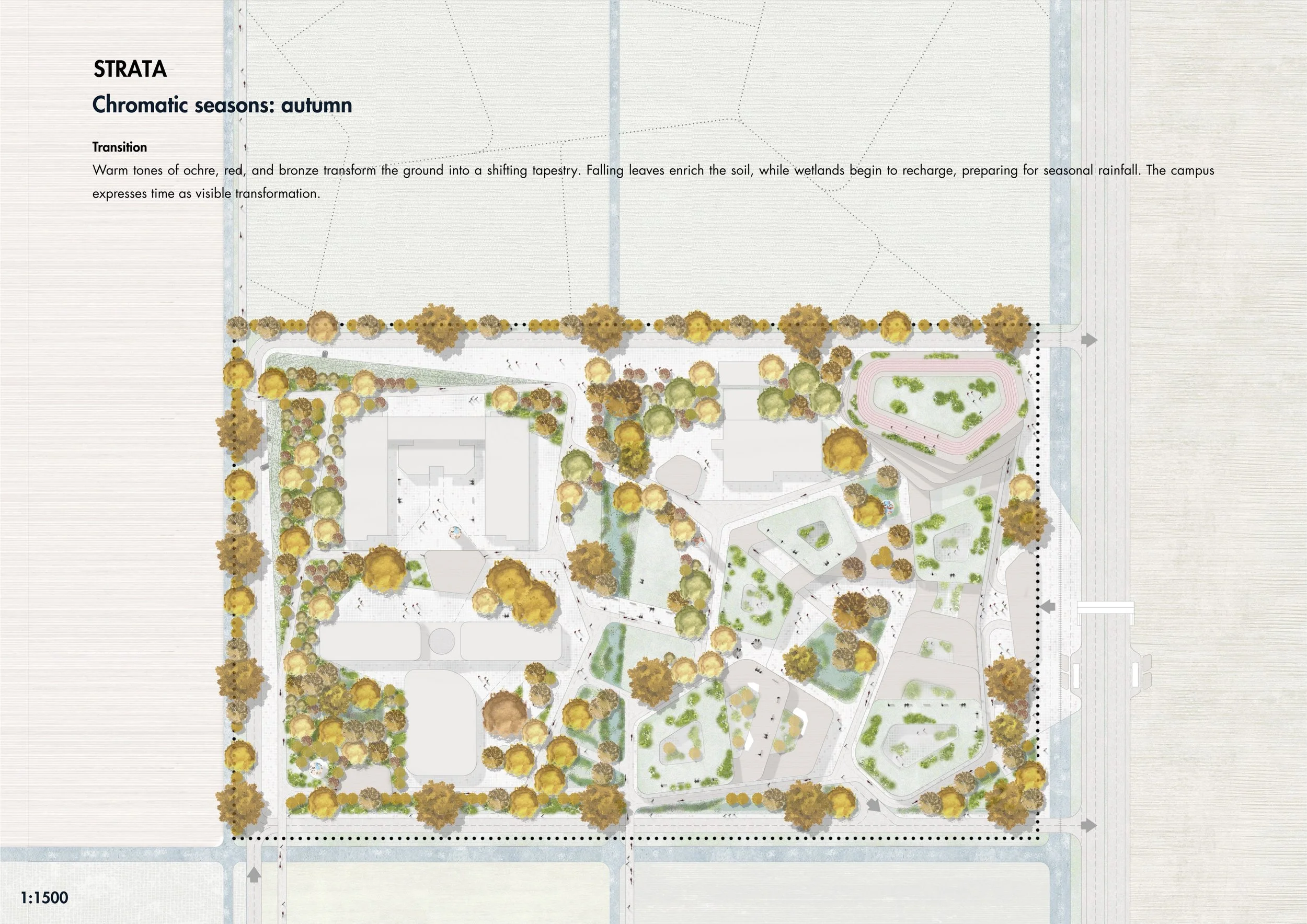
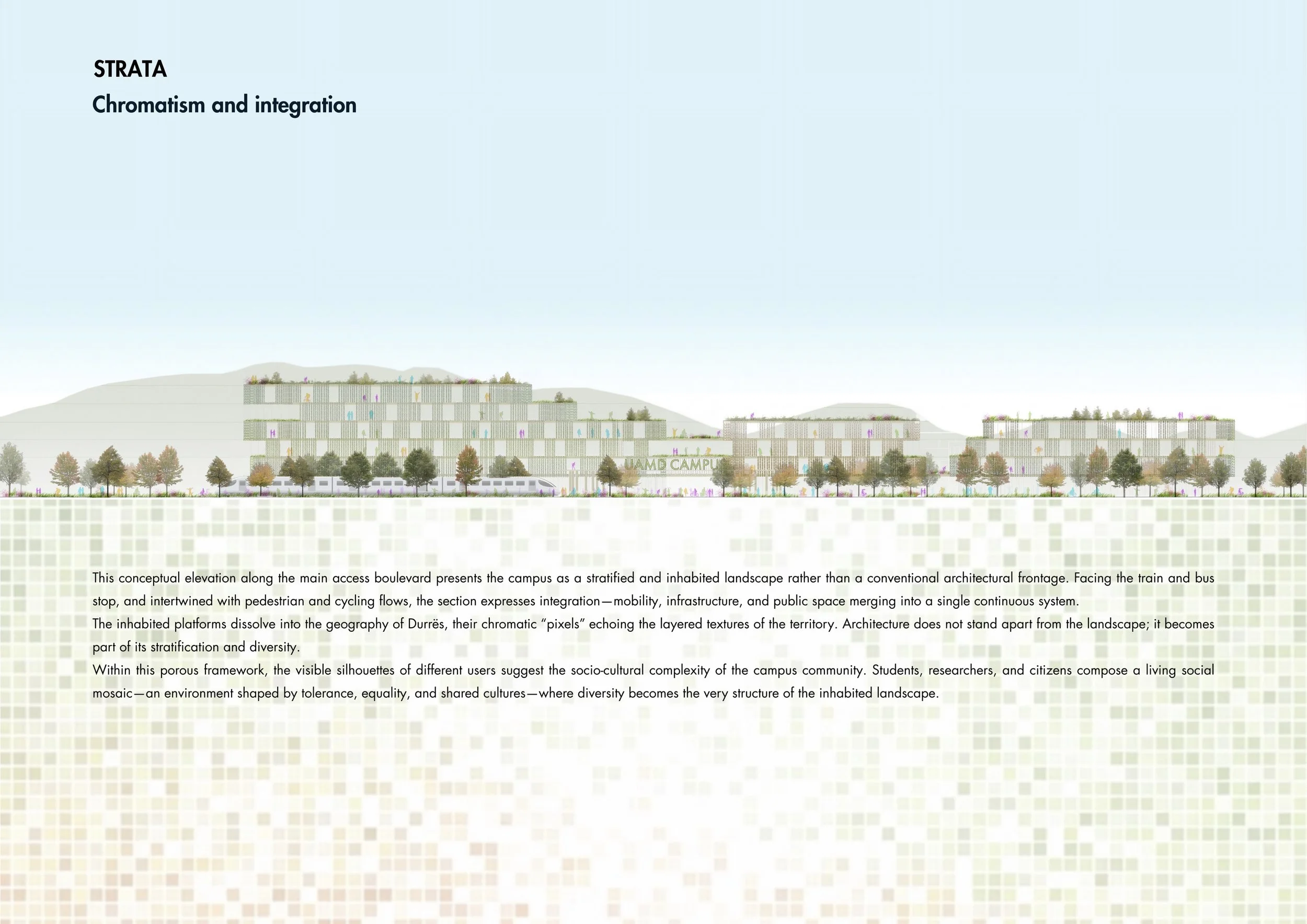
Strata brings together the geography, history, and civic identity of Durres into a single spatial framework. By transforming the university campus into an open, layered infrastructure of exchange, the masterplan reconnects education, culture, innovation, and everyday life with the city and its territory. Rooted in Durres' role as a historic gateway and designed for long-term social and economic sustainability, STRATA establishes a contemporary city within the city, a living landscape where knowledge, movement, and public life continuously intersect.
Counterbalancing youth migration
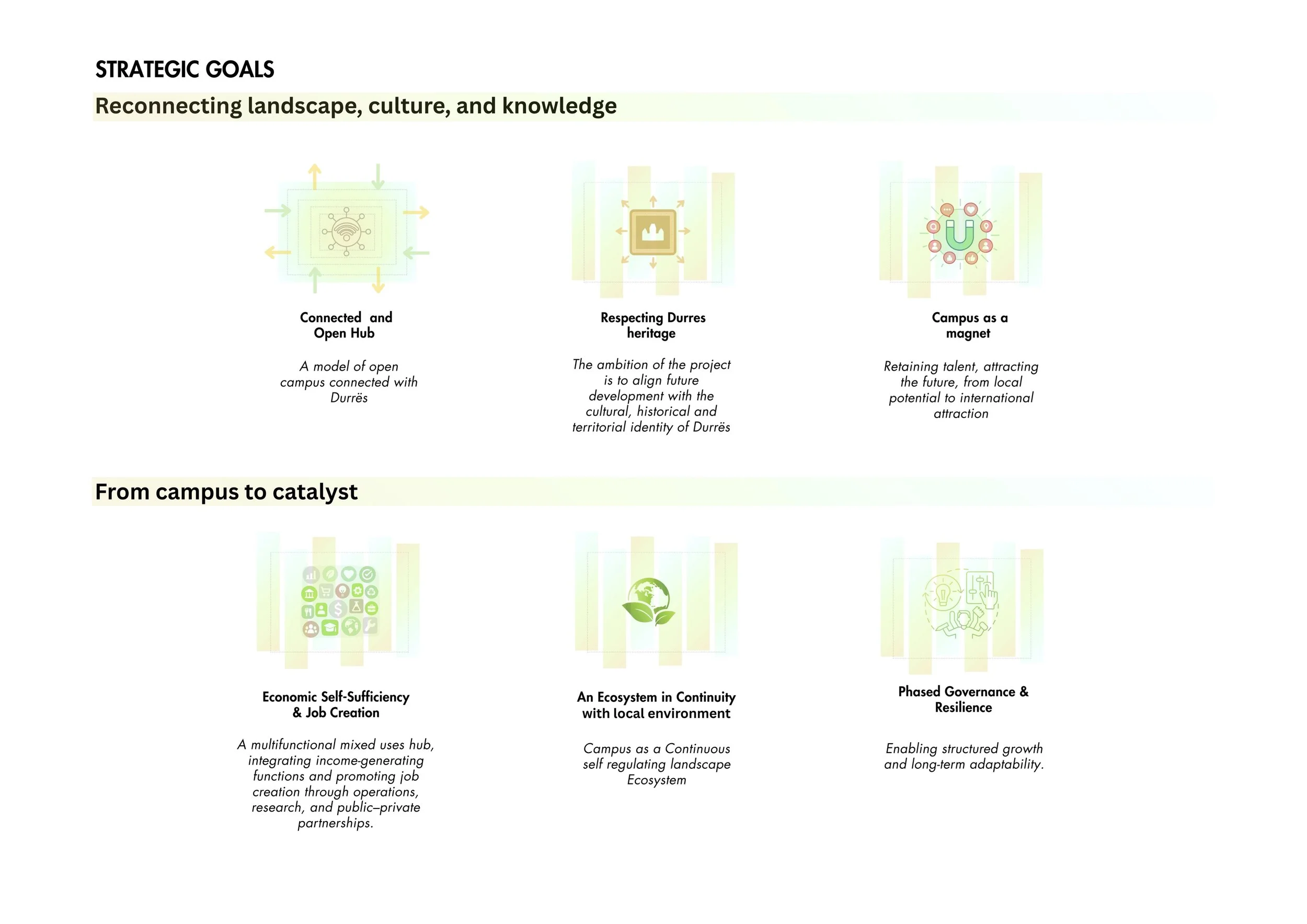
Within the context of Albania's aspiration to integrate into the European educational framework and the global knowledge economy, the new campus acts as a strategic counterbalance to youth migration. By combining high-quality education with an open, inclusive, and contemporary living environment, it offers a compelling alternative to displacement.
The campus is envisioned as a place where Albanian students choose to stay and grow, and where European and international students choose to arrive, drawn not only by academic programs, but by a civic landscape of exchange rooted in the identity, history, and geography of Durres.
Economic self-sufficiency as an integrated strategy
Economic self-sufficiency is conceived as a cross-cutting principle of the masterplan rather than a separate objective. The campus is designed to operate as an active urban system, where educational, cultural, social, and recreational functions contribute to its long-term economic viability.
Student housing, cultural and sports facilities, innovation spaces, services, and selected commercial activities are integrated into the spatial structure of the campus and opened to the wider community. This mix of uses generates continuous activity throughout the day and across seasons, supporting diversified revenue streams while reinforcing the campus' role as a civic destination.
By embedding economic functions within an open and accessible urban framework, the campus reduces dependency on external funding and ensures that operational revenues are reinvested into maintenance, public spaces, and academic and social programs. Economic sustainability thus becomes an enabling condition for spatial quality, social openness, and longterm resilience, aligning the university's institutional mission with the economic dynamics of the city of Durres.