

TEAM:
Roberto Ferlito Main partner
Alessandra Faticanti Main partner
Francesco Polidori, architect
Francesca Patrignani, architect
Kasia Reka, architect
Konrad Napierala, Junior Architect
Assigned Typology: Public facilities, landsacape, waterfront
Client: Public
Project phase: settled competition
Date: 2025
WATERCITYFRONT Pesaro, Italy, settled competition
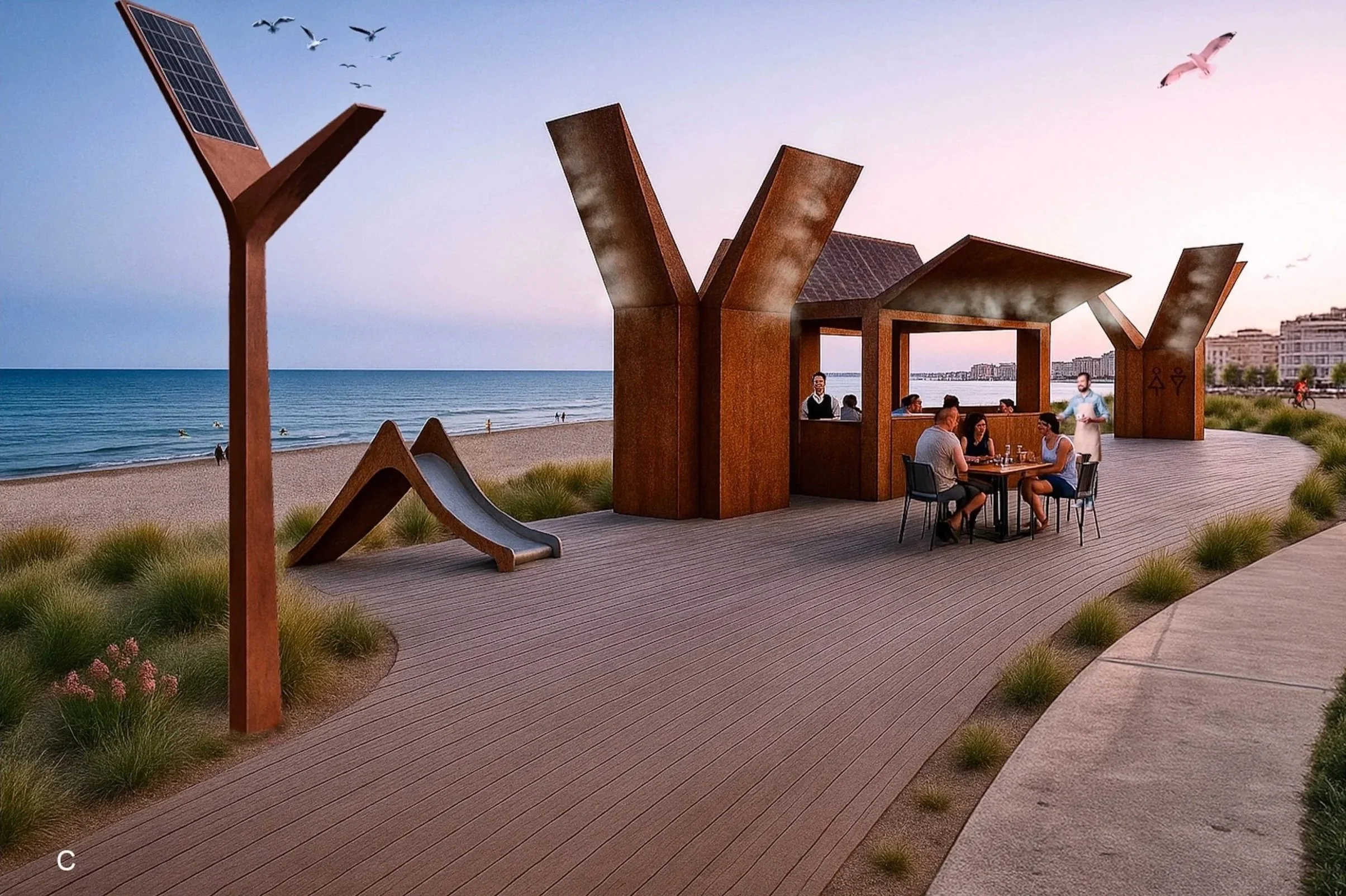
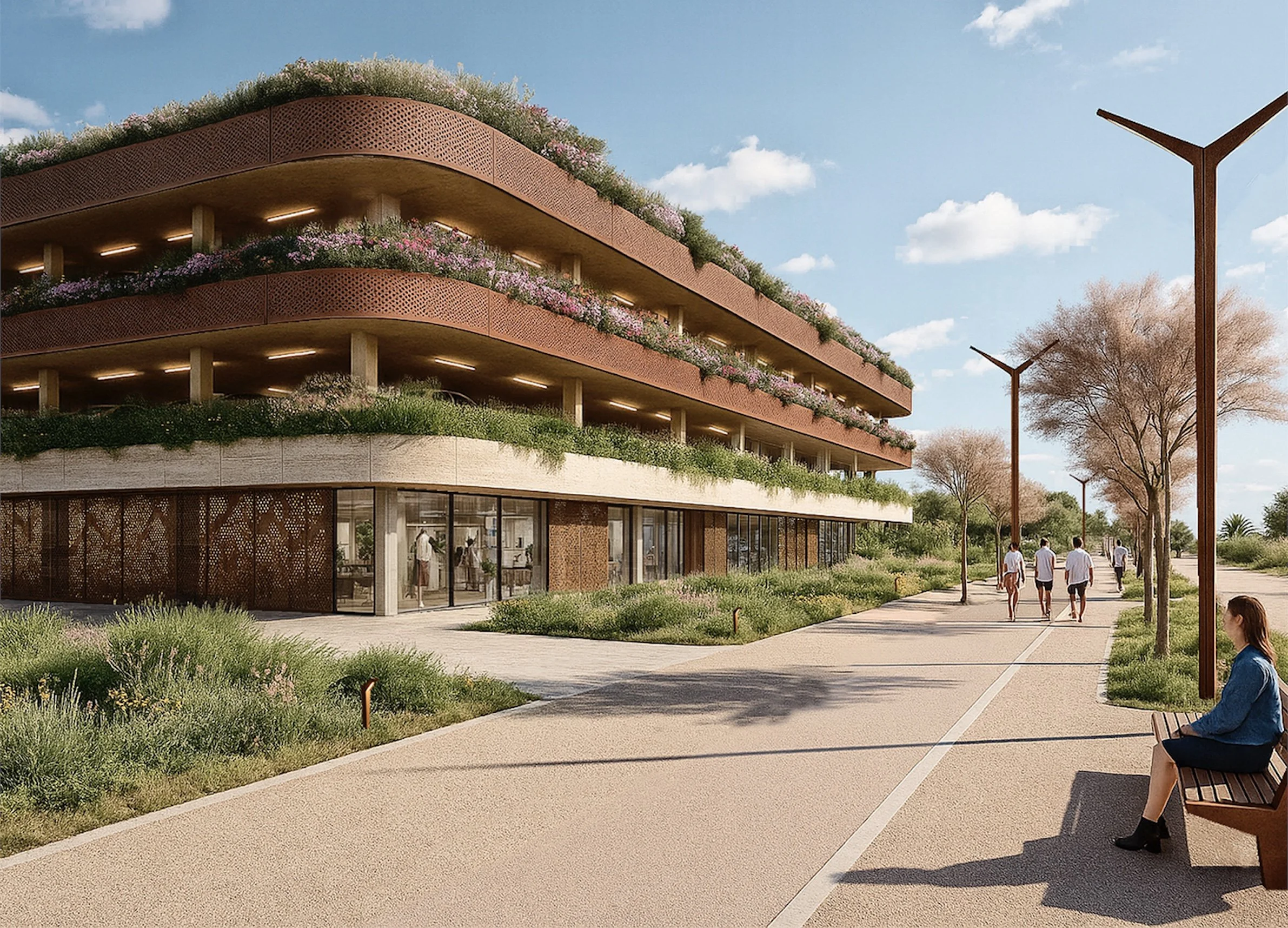
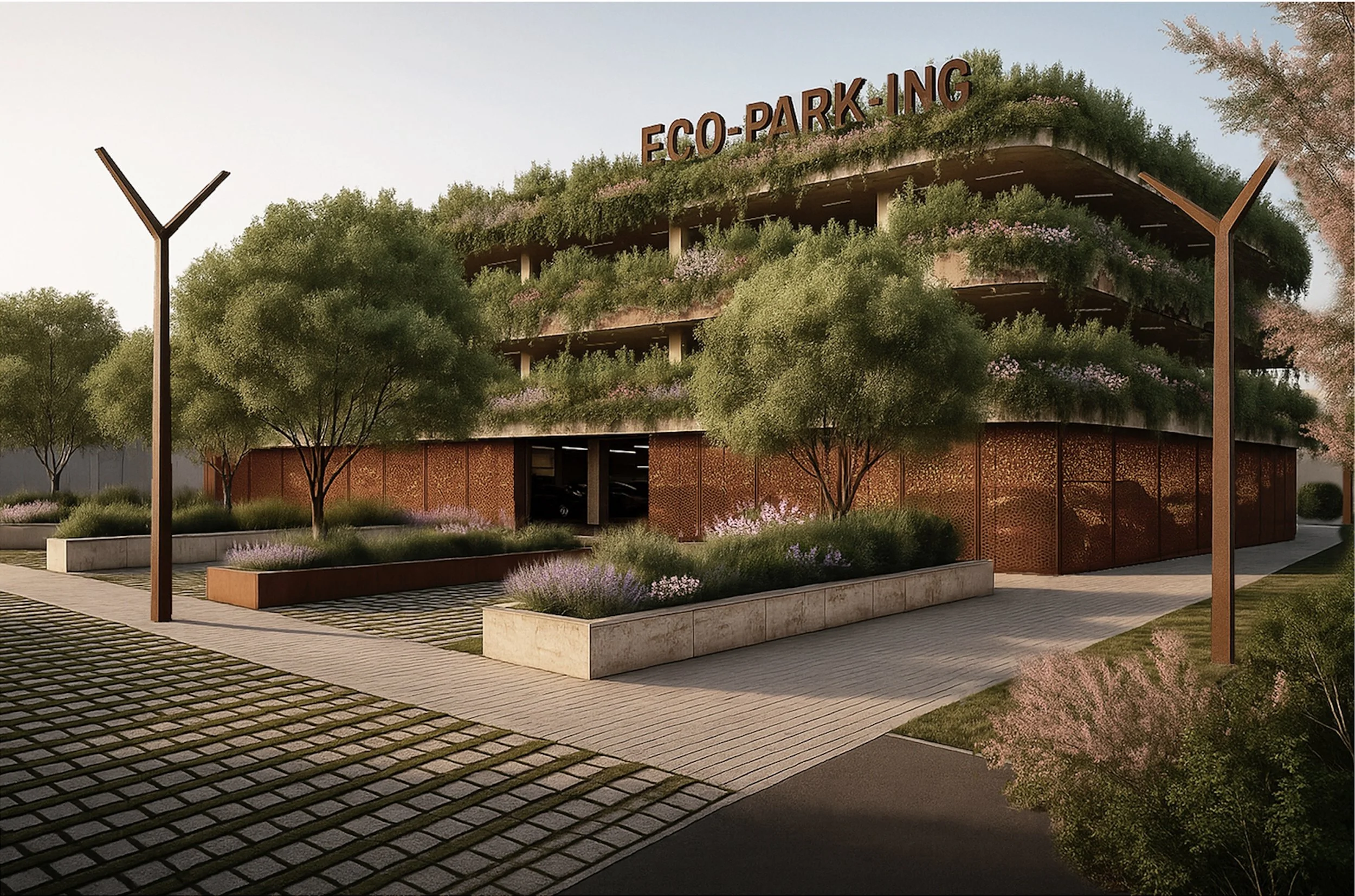
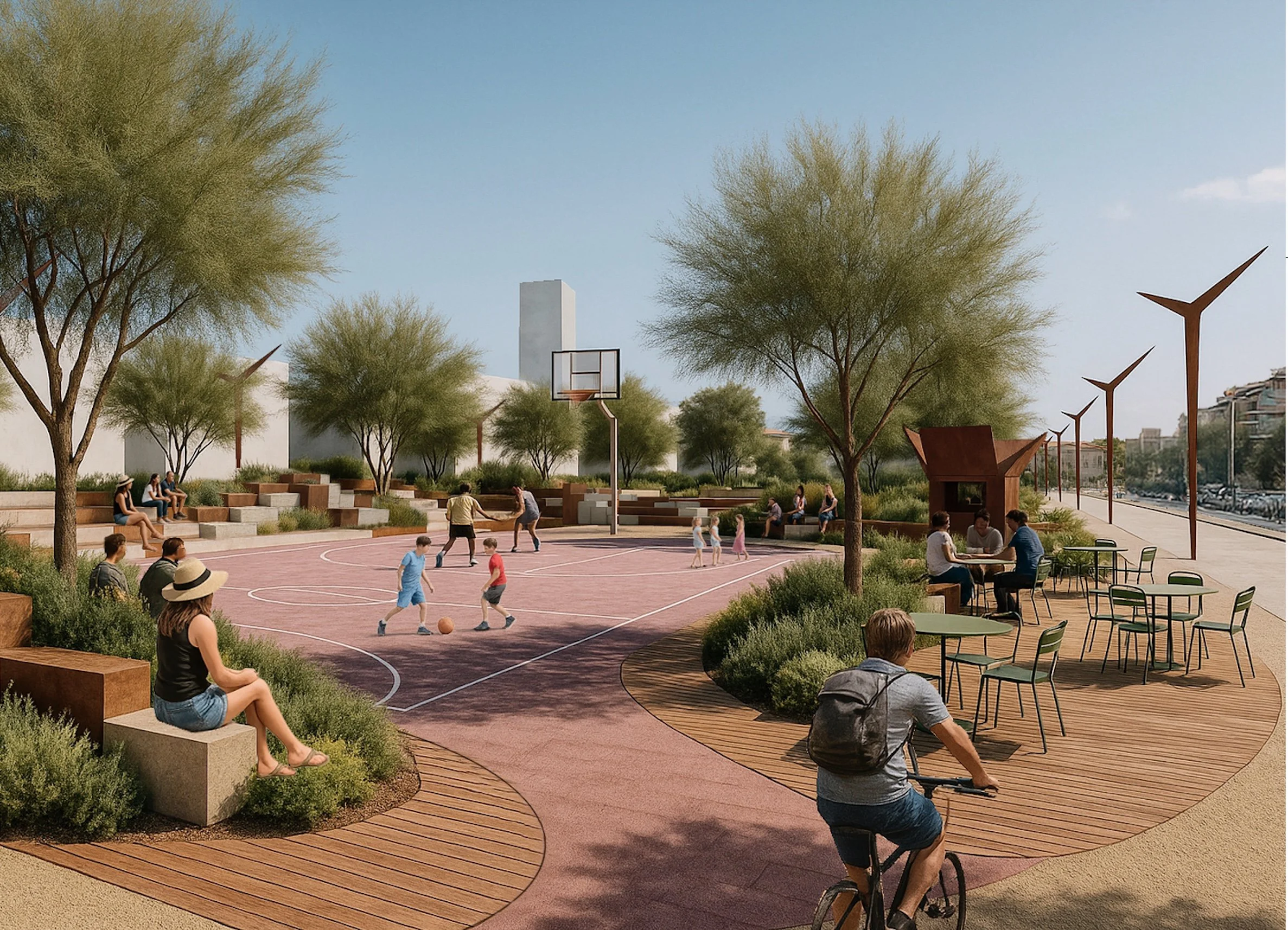
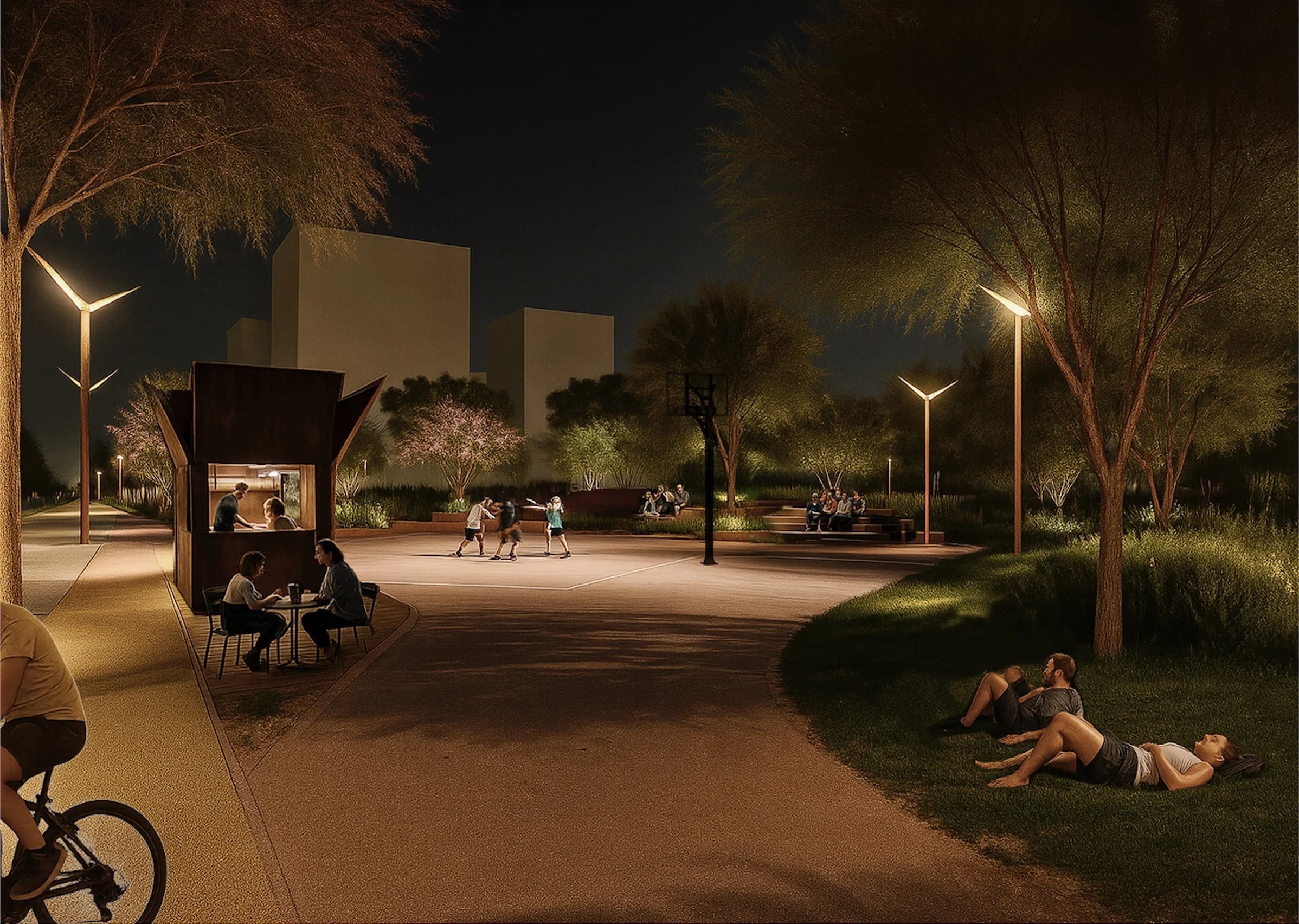
The WaterCityFront Ponente project is an urban regeneration proposal that reconnects the city to its most powerful horizon: the sea. Through a unified, modular, and progressive design, it transforms Viale Trieste into a continuous urban and landscape system that is accessible and lively year-round. It is a project that does not merely address a waterfront: it reinvents it as an experiential sequence where public space, nature, and infrastructure merge into a new shared landscape.
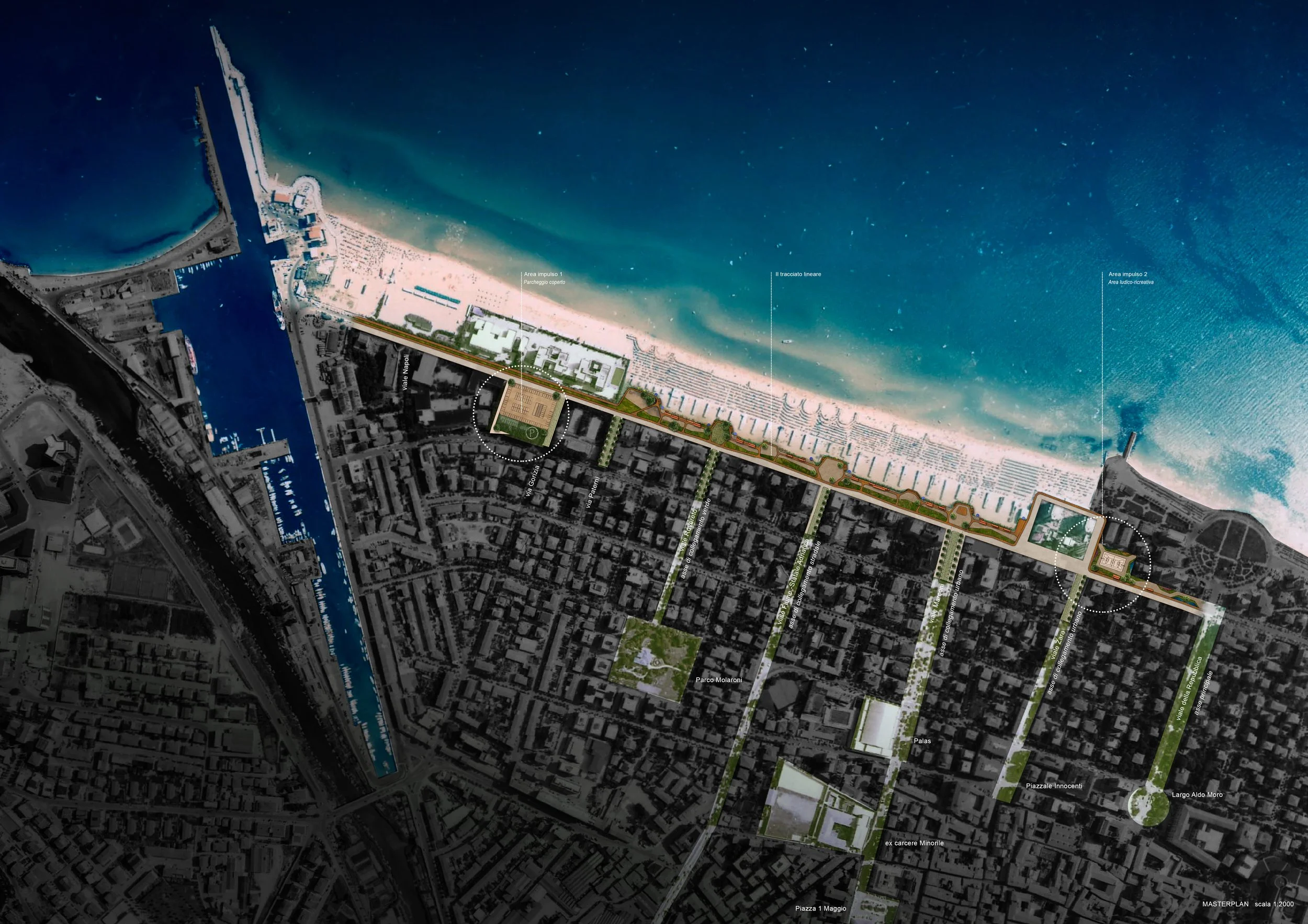
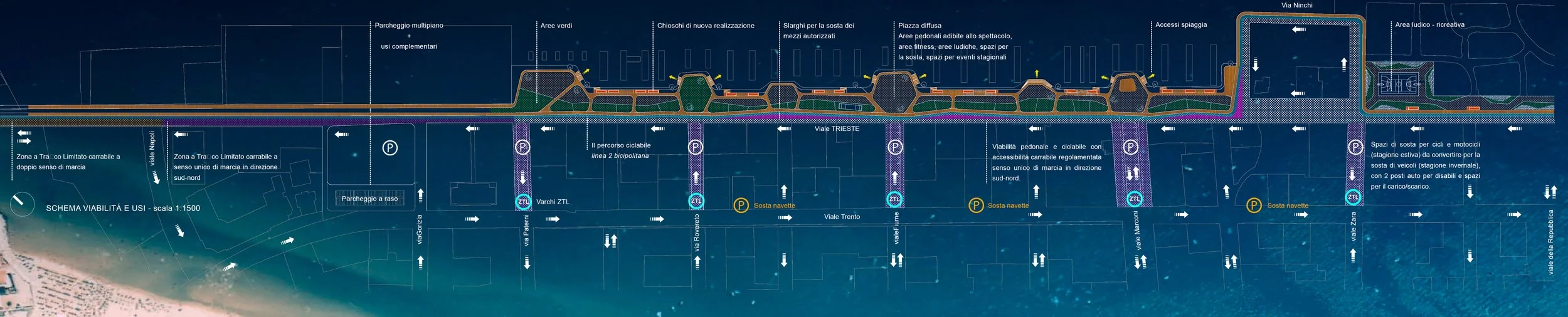
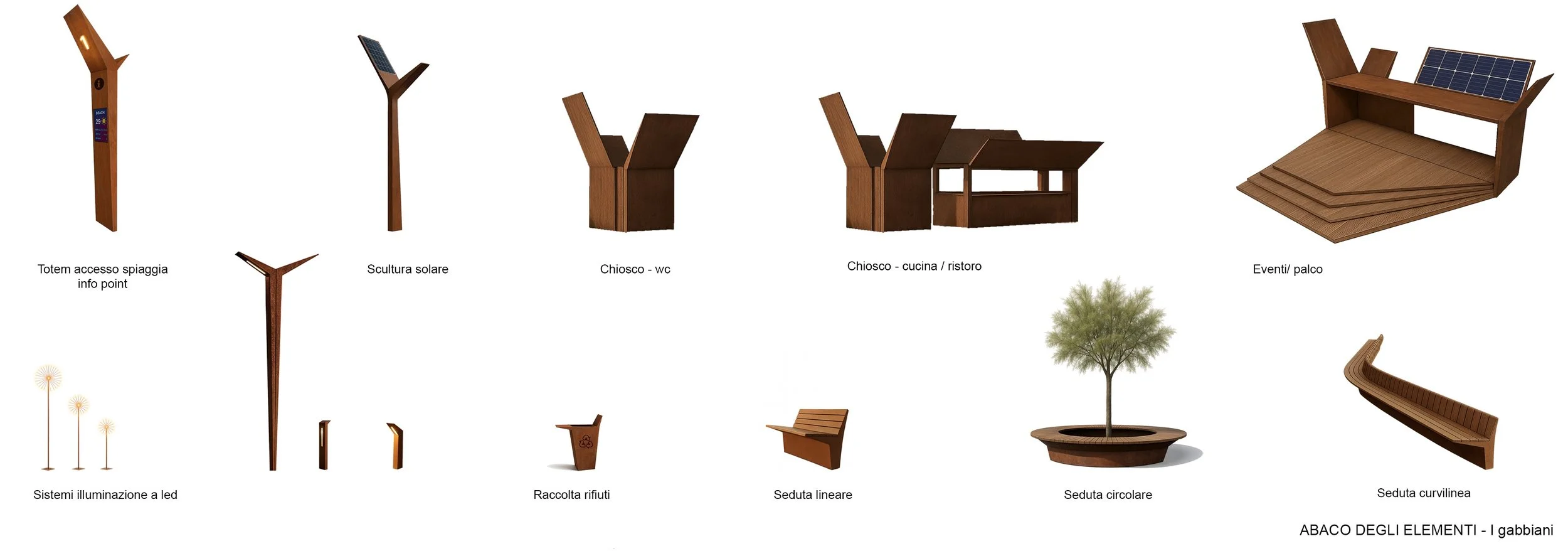
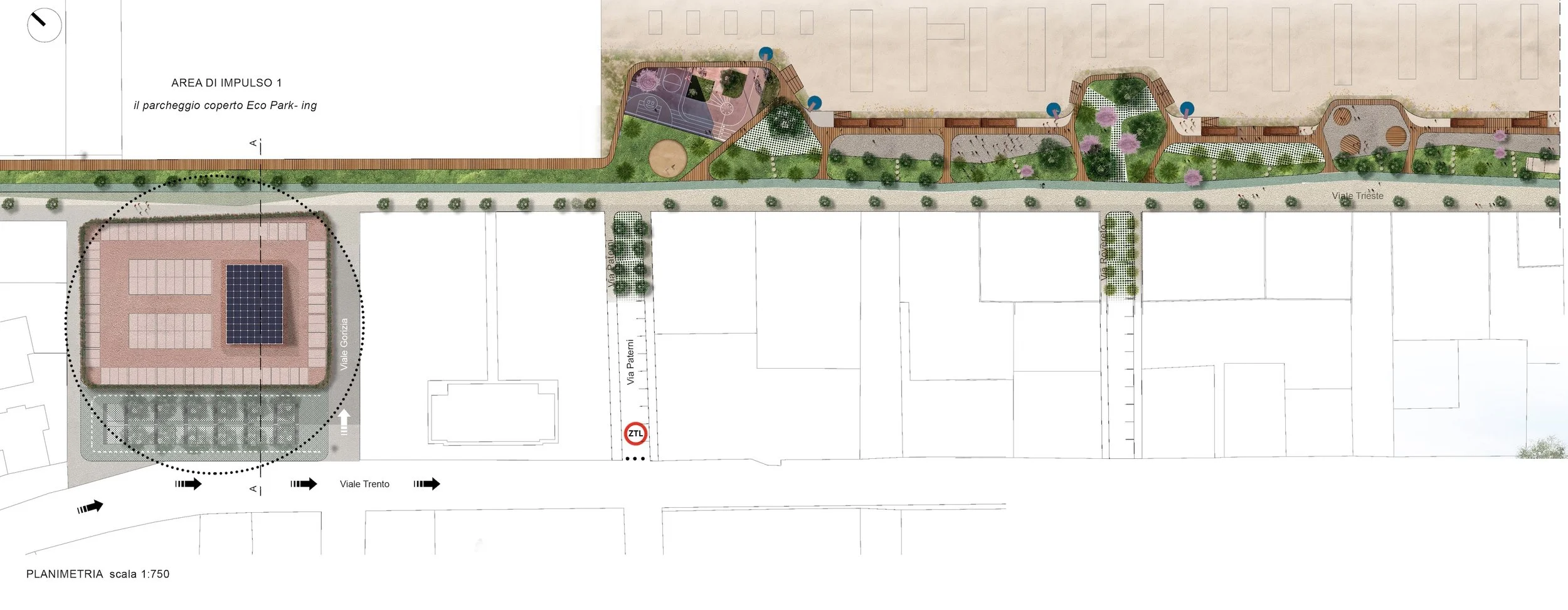
Design quality and consistency with the competition objectives : The proposal is based on a clear, legible urban structure that can be activated in functional phases. In the masterplan, the linear route of Viale Trieste is reinterpreted as a pedestrian and cycle axis, articulated in three sections—south, central and north—marked by viewpoints, panoramic terraces, modular kiosks and new equipped public spaces. The sequence is designed to promote transverse connections (Via Paterni, Viale Marconi, Zara, Rovereto, Fiume), reactivating the city-sea relationship also in its cultural and relational dimension with other urban nodes and hubs. The proposal is based on a clear, legible urban structure that can be activated in functional phases. In the masterplan, the linear route of Viale Trieste is reinterpreted as a pedestrian and cycle axis, articulated in three sections—south, central and north—marked by viewpoints, panoramic terraces, modular kiosks and new equipped public spaces. The sequence is designed to promote transverse connections (Via Paterni, Viale Marconi, Zara, Rovereto, Fiume), reactivating the city-sea relationship also in its cultural
The intervention takes the form of a dispersed square that respects the historic morphology of the garden city, enhancing and reinterpreting the old roundabouts by converting them into multifunctional viewpoints—identifying elements that structure the narrative of the space. The new terraces on the sea become areas for activities that serve as additional focal points of attraction across different seasons (summer–winter).
The new linear alignment of Viale Trieste is the focal point of the proposed urban transformation. A landscape infrastructure that does not divide but connects city and sea, reinterpreting the seafront as a sequence of open, layered public spaces. The current rigid profile of the waterfront is softened with fluid forms that engage with the existing topography and the shoreline, introducing porous, accessible spaces that are permeable to sight and movement.
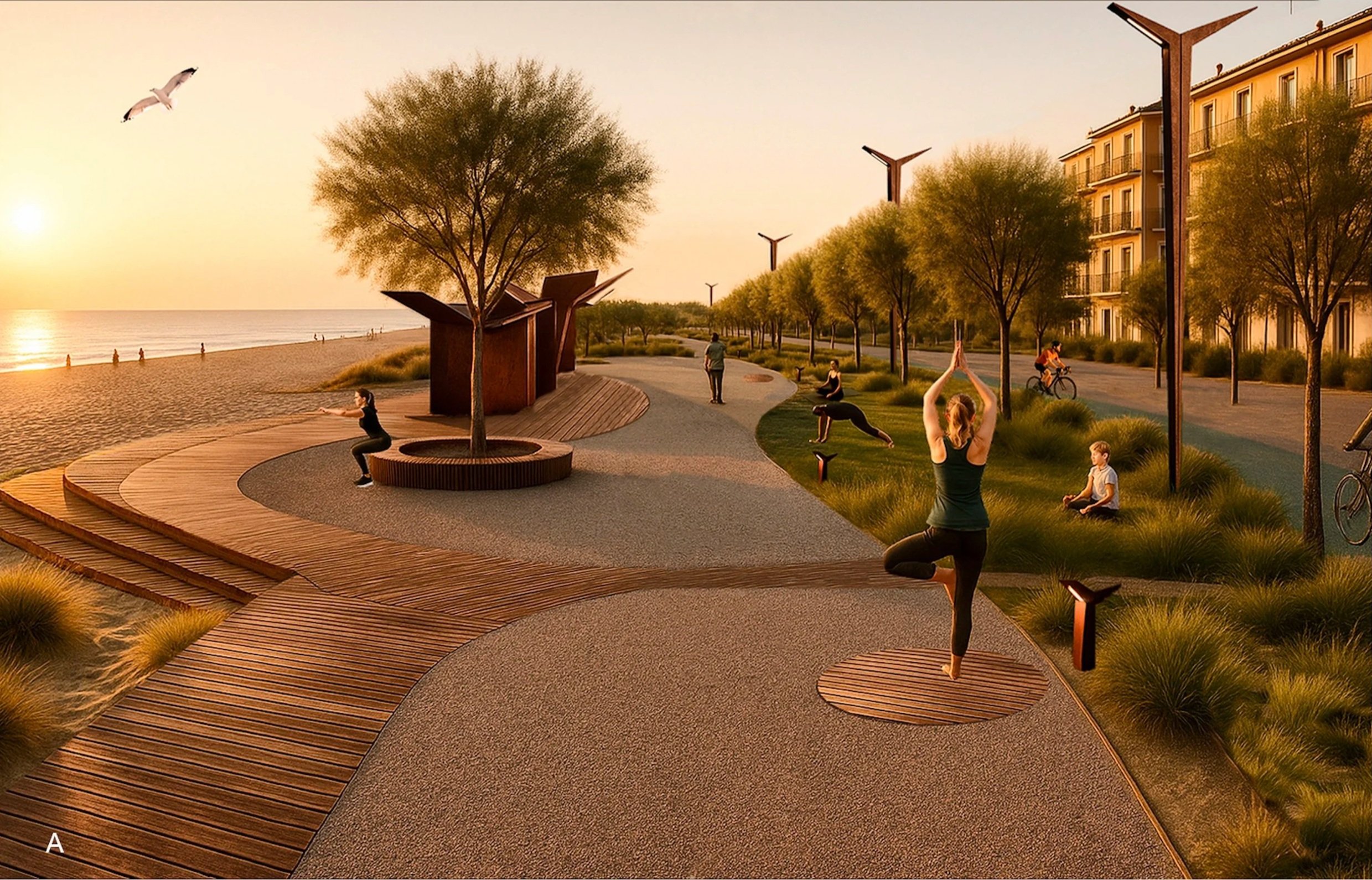
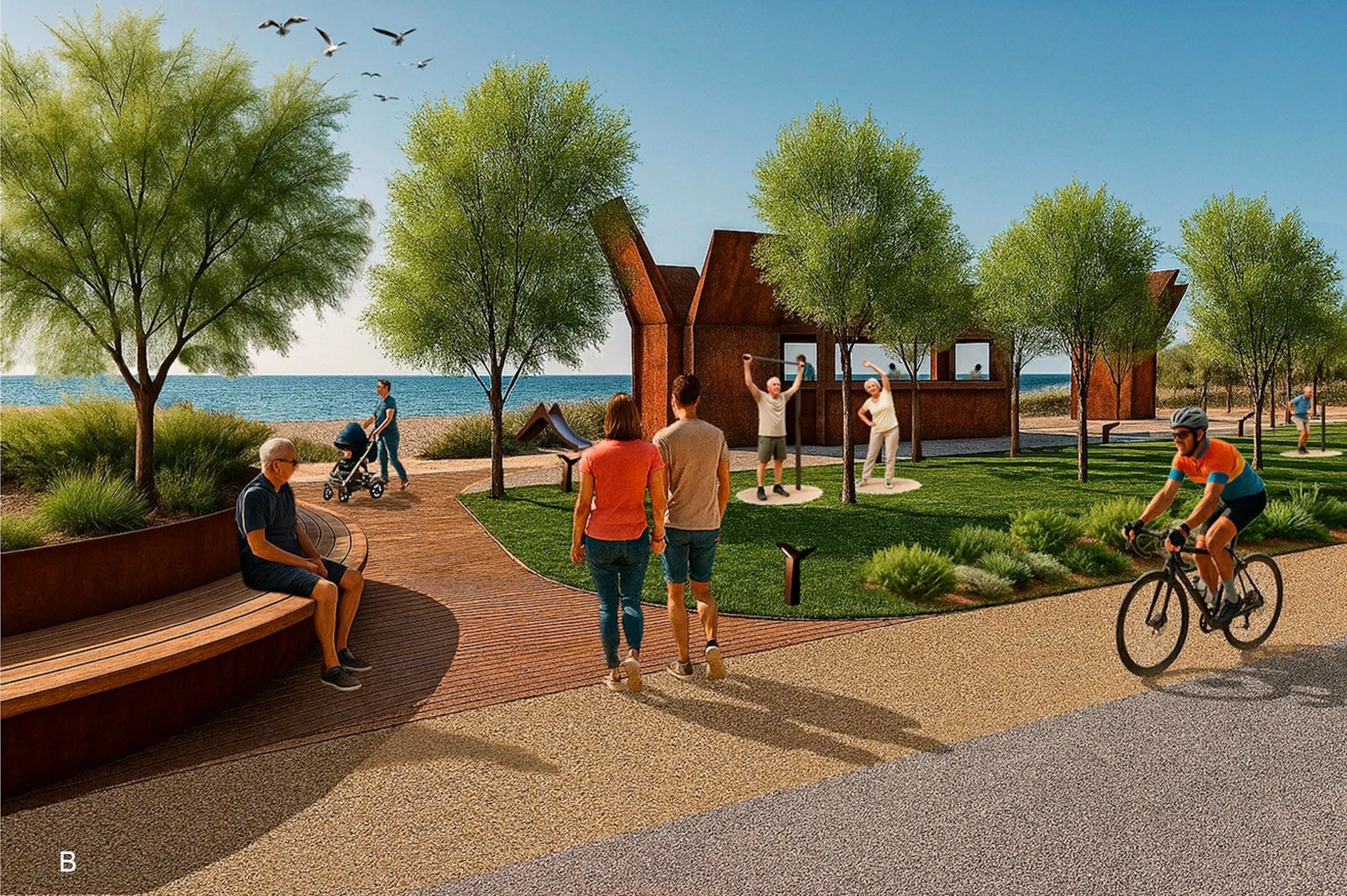
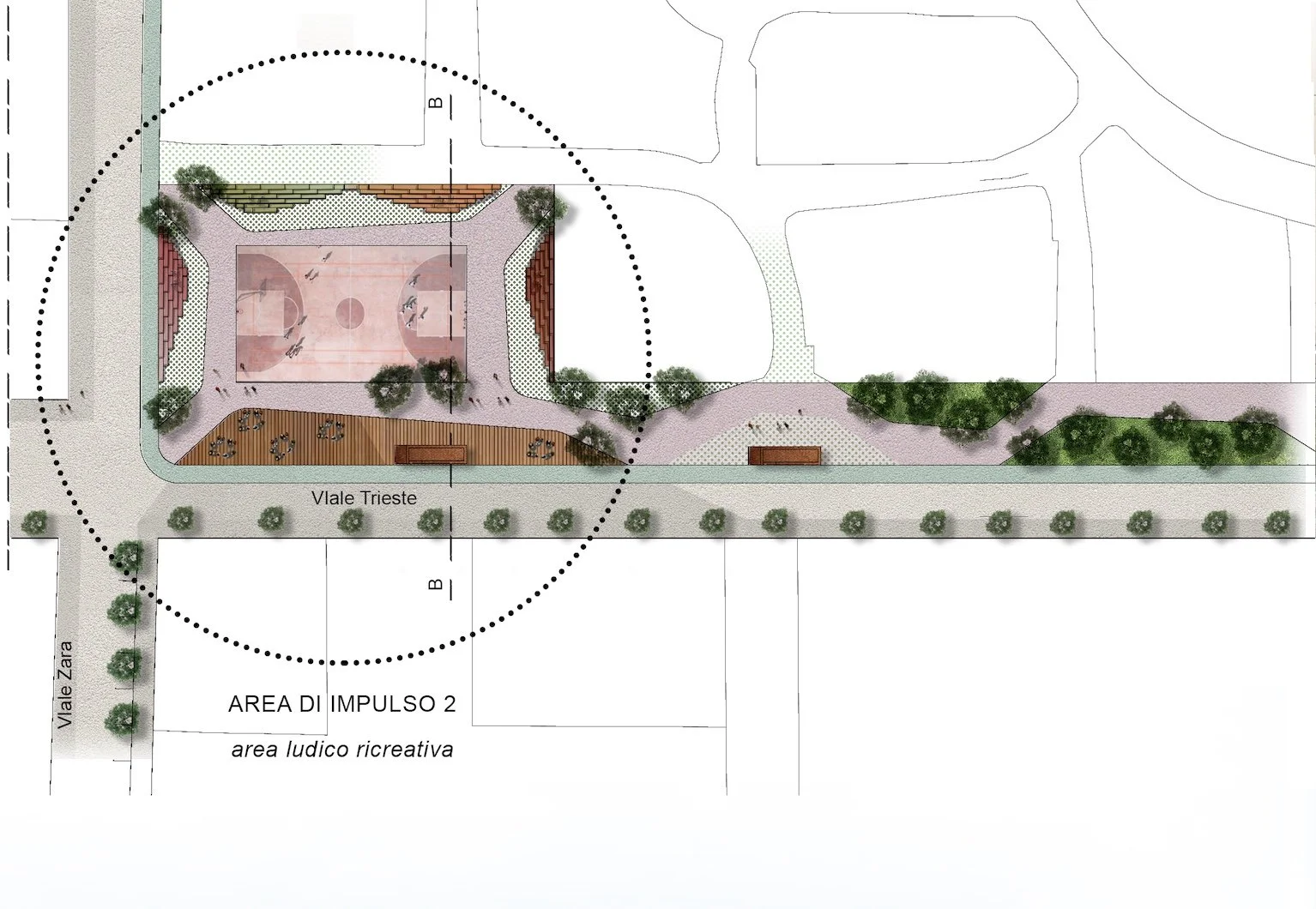
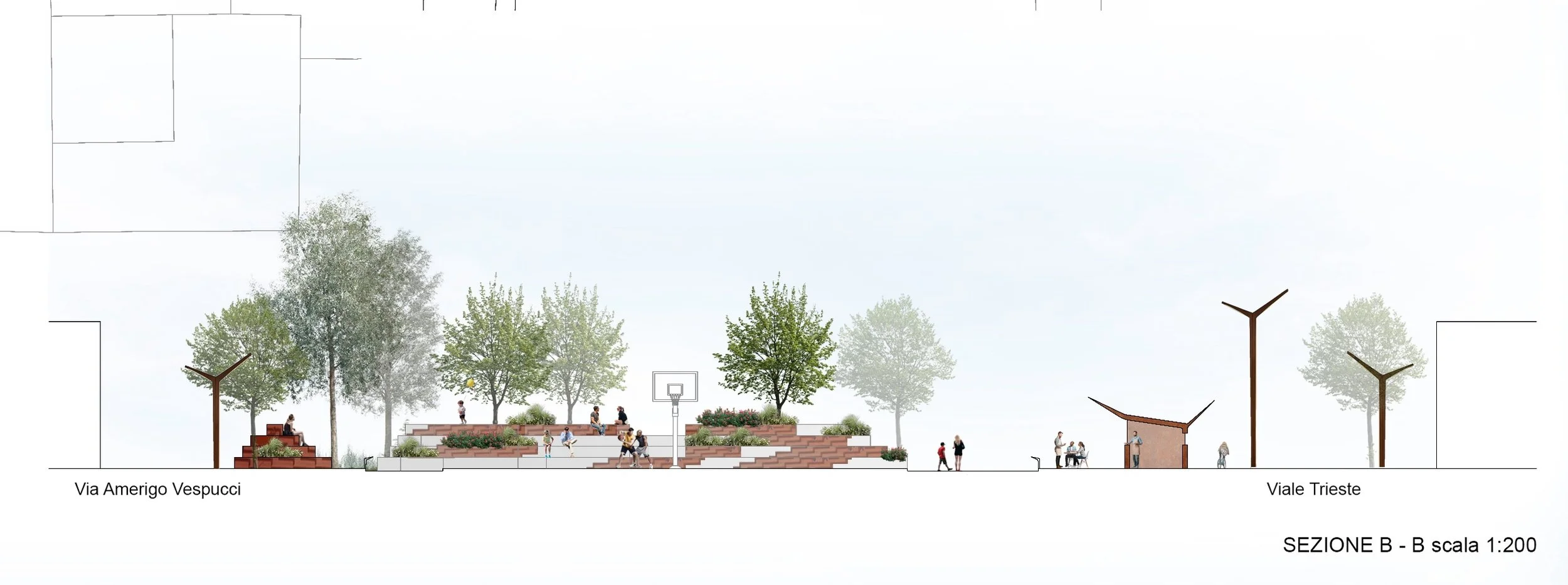
Translate into English: The design proposes six lookout terraces — multifunctional landscape devices, integrated into the urban and coastal fabric — each with its own identity and intended use, built with natural materials and arranged in a rhythmic sequence along the avenue. Specifically:THE ACTIVE WAVE: a terrace dedicated to well-being and physical activity, with multifunctional sports courts, circular seating, and protective vegetation that absorbs and integrates.
THE GROVE: a shaded space for meeting and resting, with permeable paving and wooden furnishings set among shrubs and small trees.
THE BEACON: the symbolic heart of the route, a slightly elevated circular belvedere that looks directly out over the sea horizon. It is a contemplative space, but also a scenic spot for small events or art installations.
THE NODE: an interchange and multimodal hub. The intermodal approach allows flexible, seasonal use of the space, integrating temporary bicycle parking, electric charging points, interactive signage, temporary logistics stopping areas, and micro-urban events. The expanded-geometry design ensures broad visual scope and accessibility, also serving as an information point for soft mobility and seasonal activities.
THE ATELIER: a teaching and creative space, with colorful paving and integrated seating, ideal for educational activities, outdoor workshops, and school use.
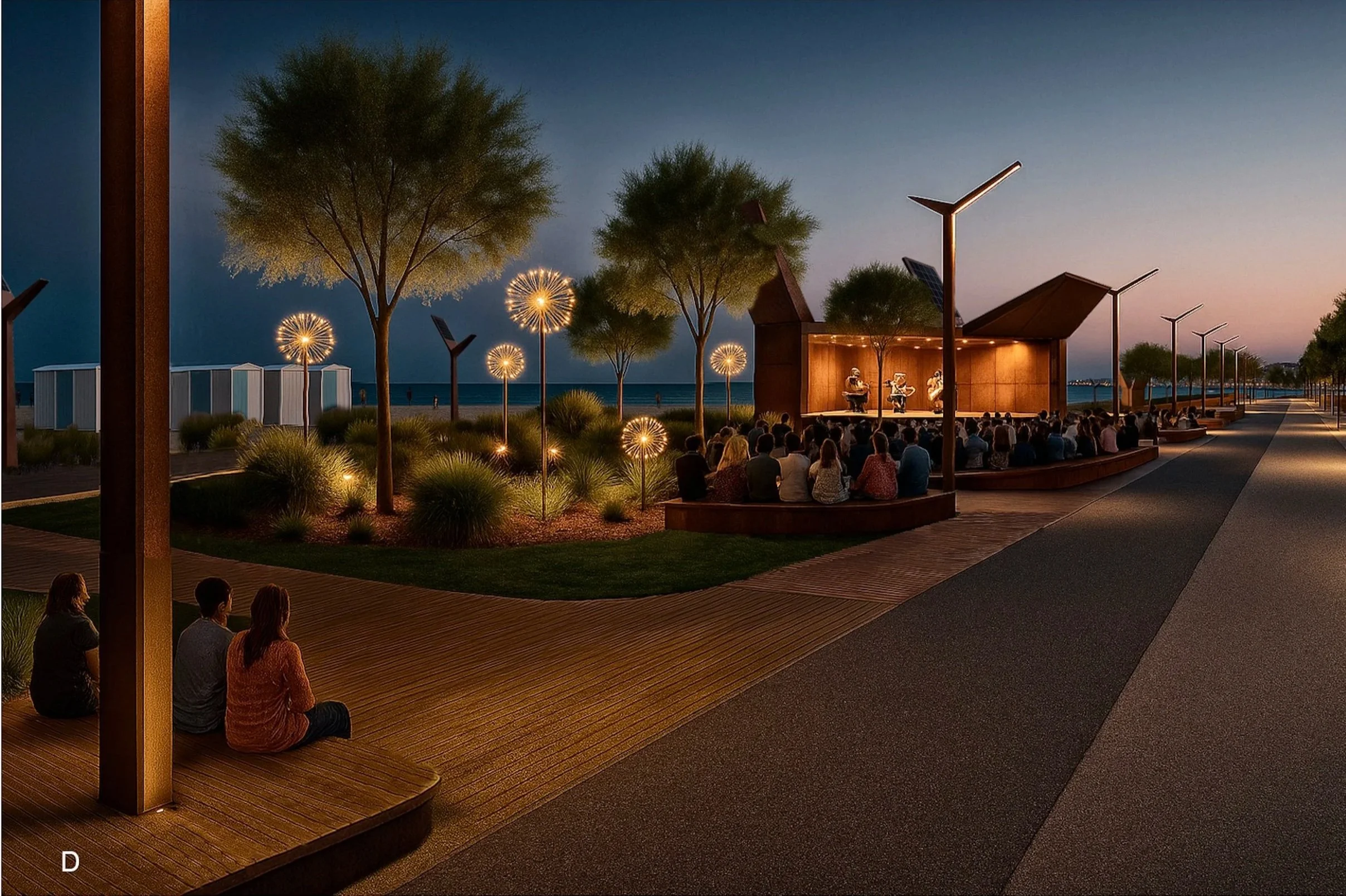
THE STAGE: a large terrace designed for events, shows, and performances, with a cavea and an integrated stage platform among vegetation and walkways.